
Best Topsoil for Gardens, Lawns & Raised Beds | Kelvin Compost
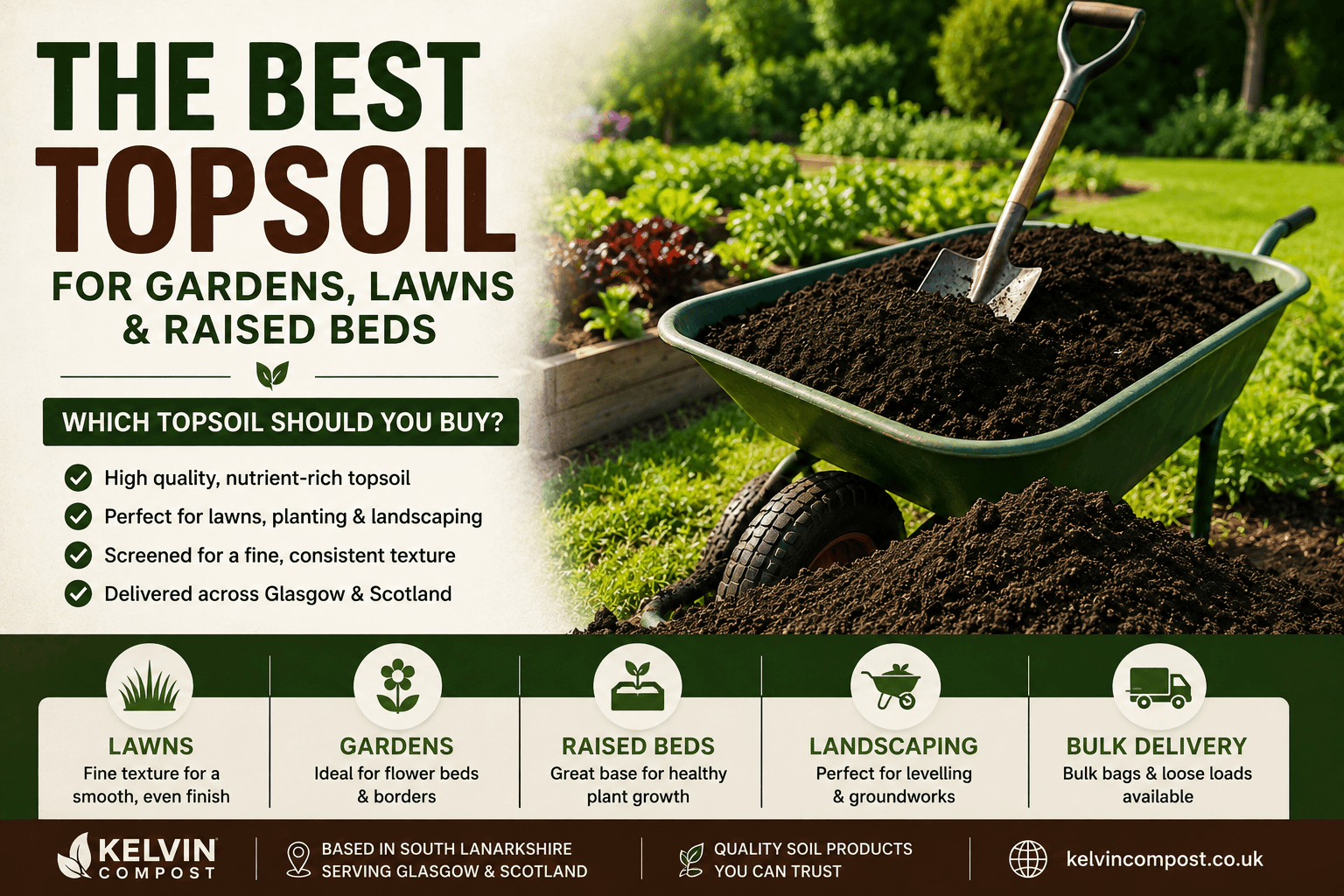
Learn how to choose the best topsoil for gardens, lawns, raised beds and landscaping. Compare screened, premium and general-purpose topsoil in Glasgow.
Qty: {{ item.qty }}
Expert guides on organic compost, topsoil, manure and garden soil for Glasgow, South Lanarkshire and Scotland.
Learn how to choose the best topsoil for gardens, lawns, raised beds and landscaping. Compare screened, premium and general-purpose topsoil in Glasgow.
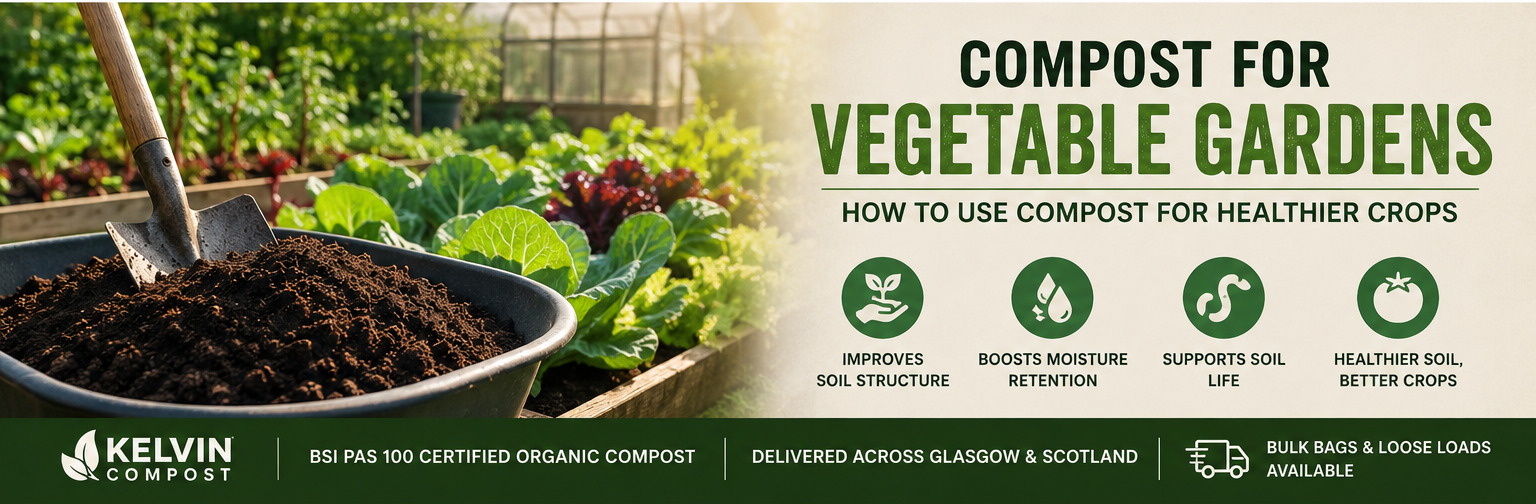
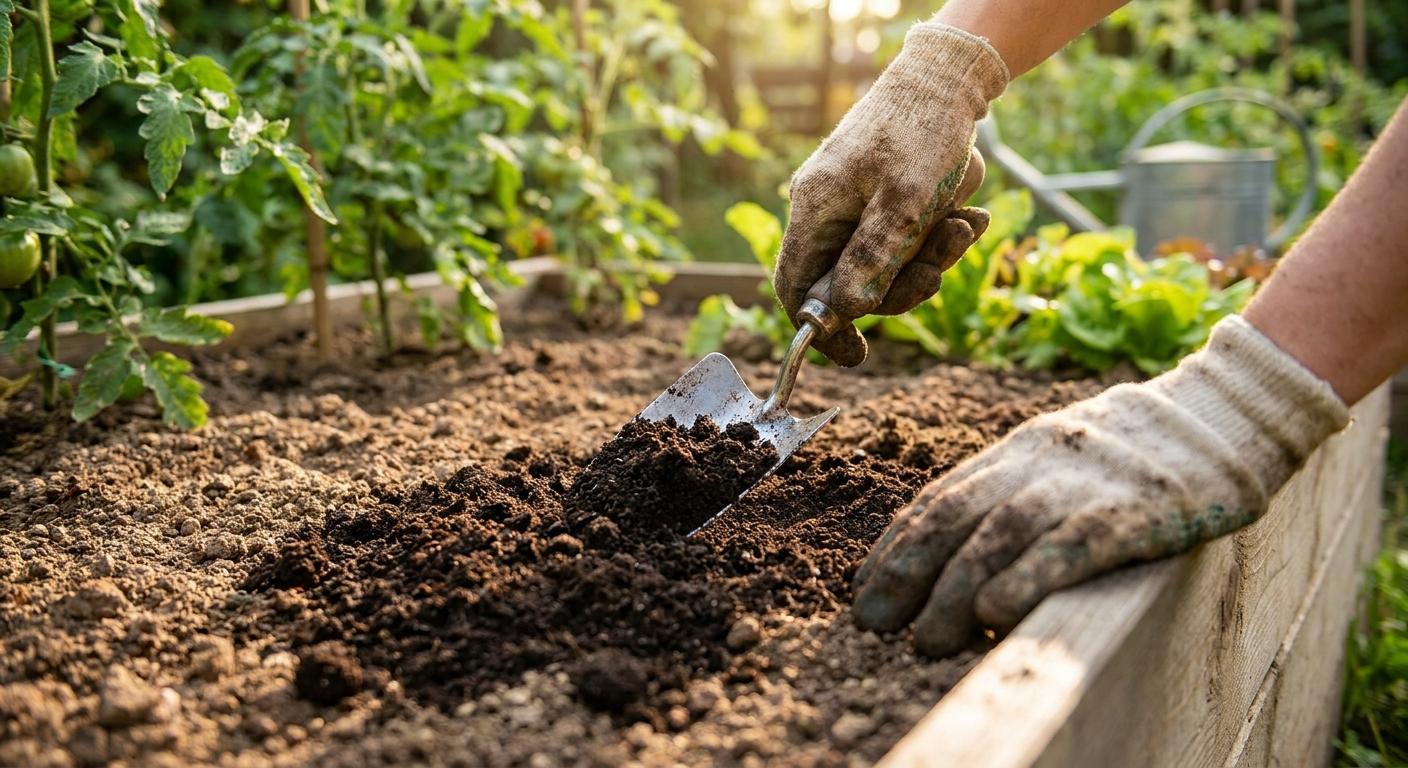
Whether you are growing vegetables in a traditional garden bed, allotment, raised bed or larger growing area, adding suitable compost can help improve soil structure and increase organic matter.
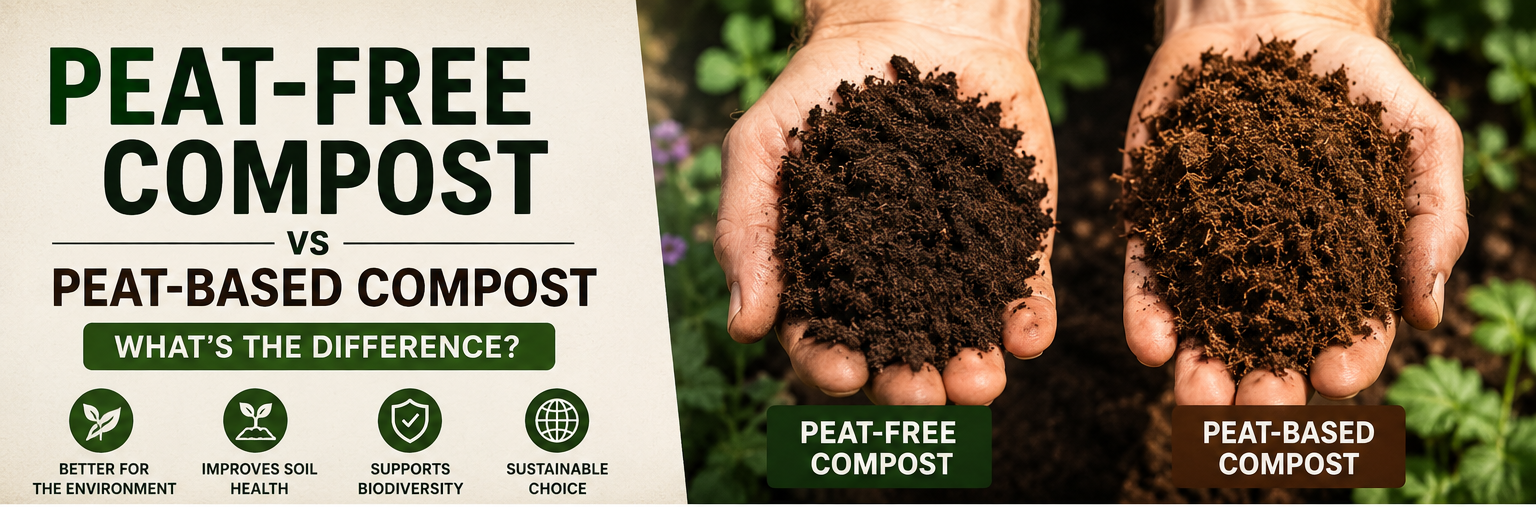
But what does peat-free compost actually mean? Is peat-free compost as good as peat-based compost? What is the difference between the two, and which should you choose for your garden?
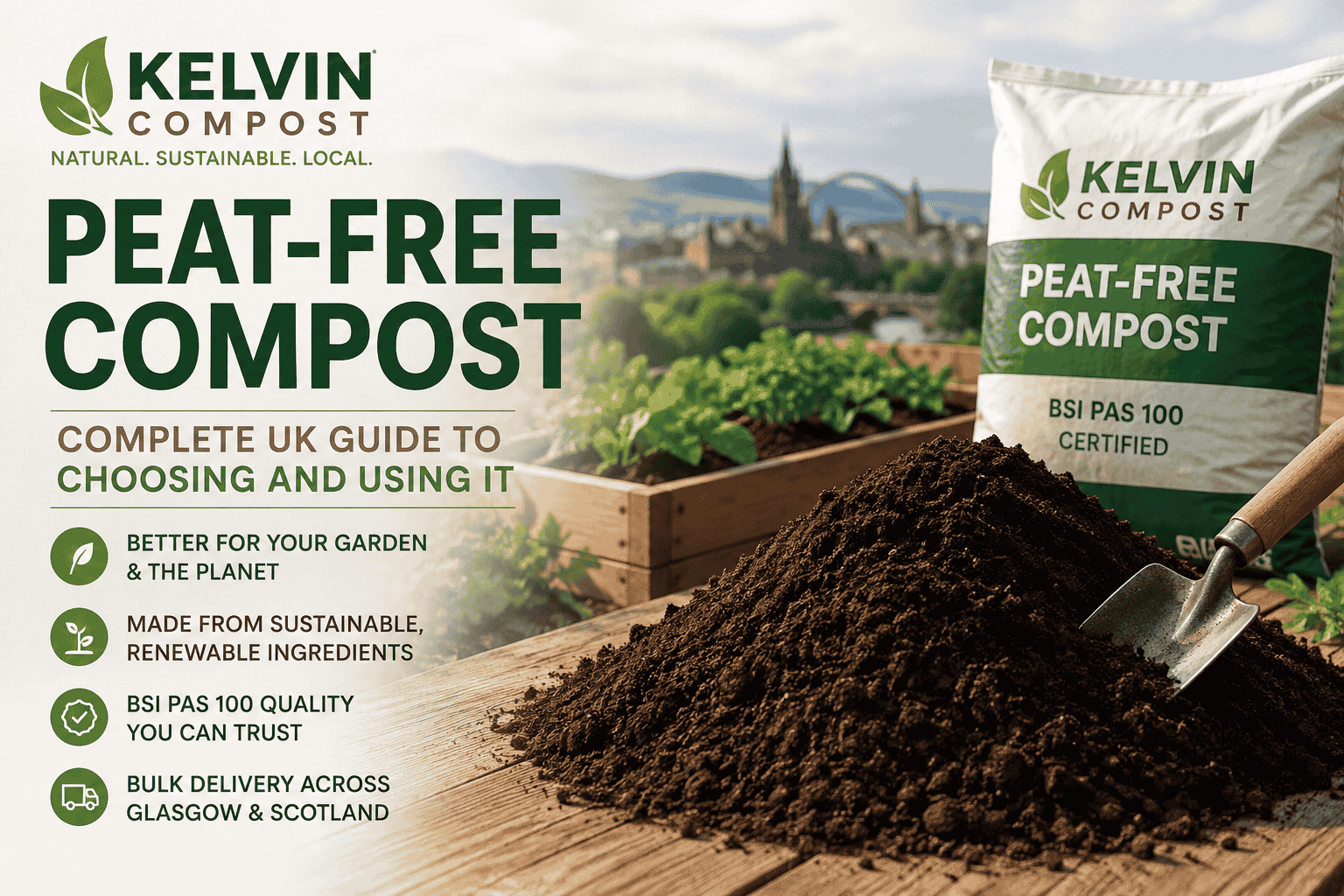
Peat-free compost is now one of the most important choices for gardeners looking to improve their soil while reducing their reliance on peat-based growing materials. For gardeners in Glasgow and across Scotland, peat-free compost can be used for vegetable beds, borders, raised beds, planters, allotments, lawn improvement and general soil conditioning.
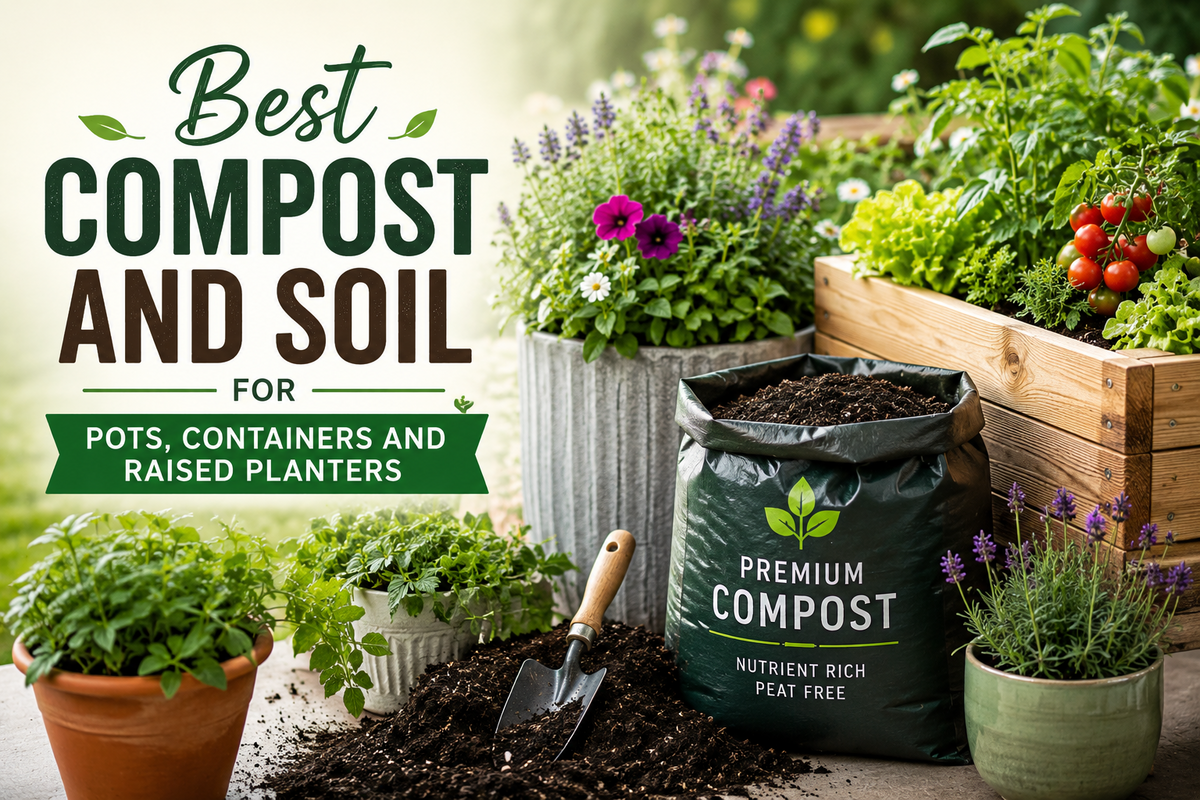
For pots and containers, use a peat-free multi-purpose or container compost rather than garden compost or topsoil — container plants rely entirely on what's in the pot, so they need a lighter, free-draining mix with consistent structure.
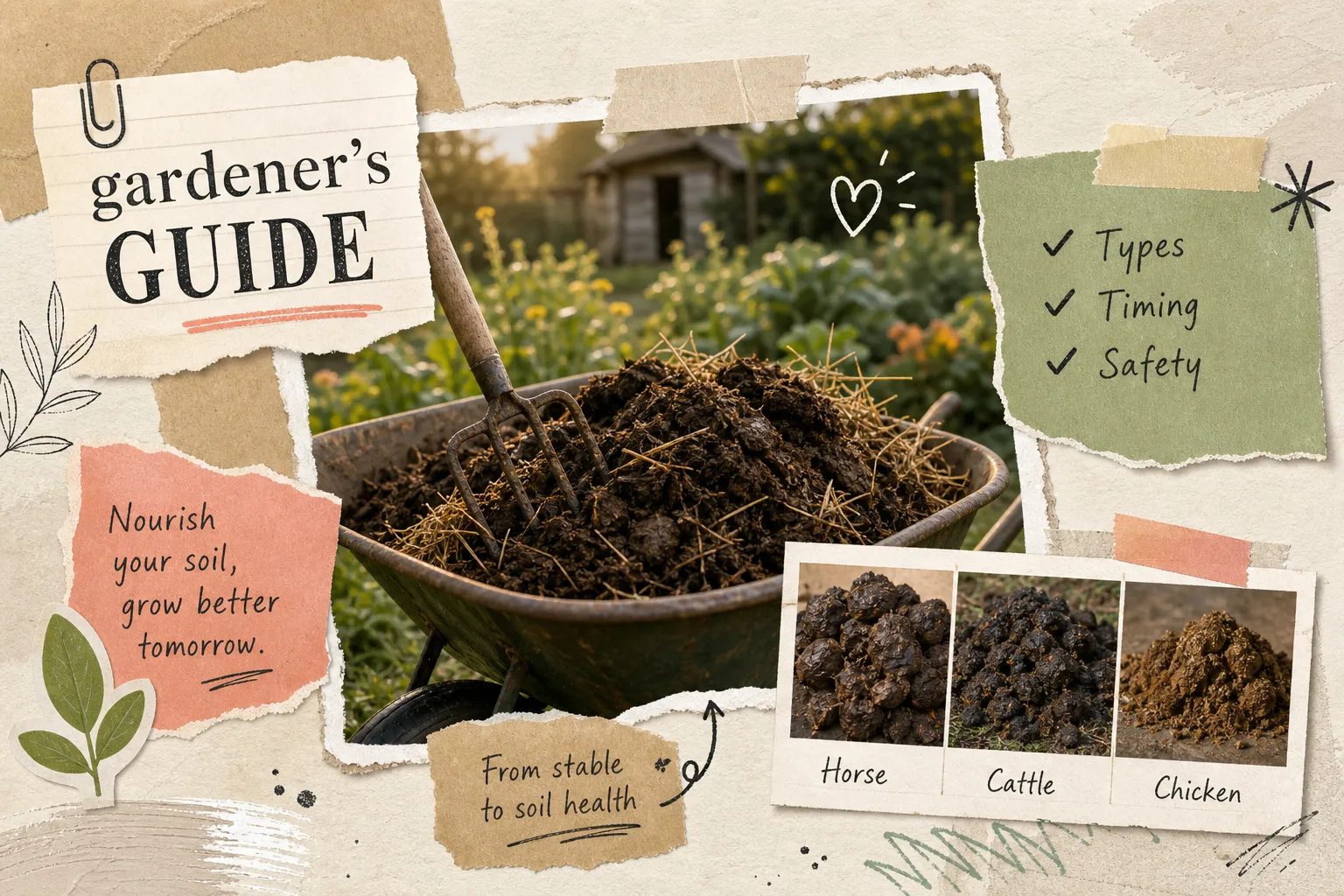
Add well-rotted manure in autumn or winter, giving it several months to break down before spring planting. Add compost in either season, but spring applications close to planting time suit fast-growing crops best, while autumn compost benefits soil structure over winter.
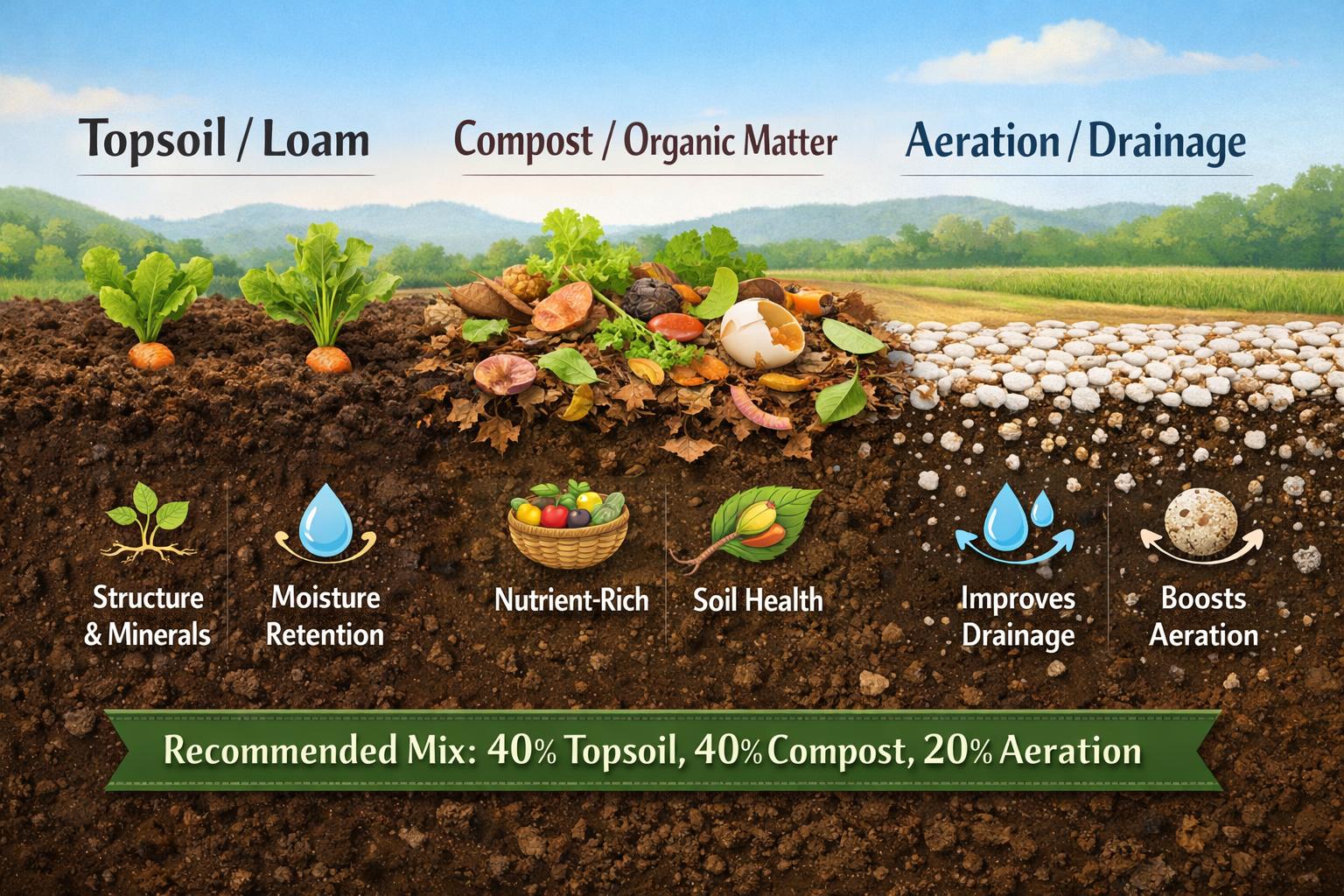
Heavy clay and waterlogged soil is best improved by working in coarse organic matter — well-rotted compost, well-rotted manure, or a compost/sand blend — to 20–30cm depth, which opens up the soil structure and improves drainage over one to two growing seasons.
For feeding an established lawn, use a screened, well-rotted compost or fine topsoil top dressing applied at 0.5–1cm depth (5–10 litres per m²), worked into the surface with a brush or the back of a rake.
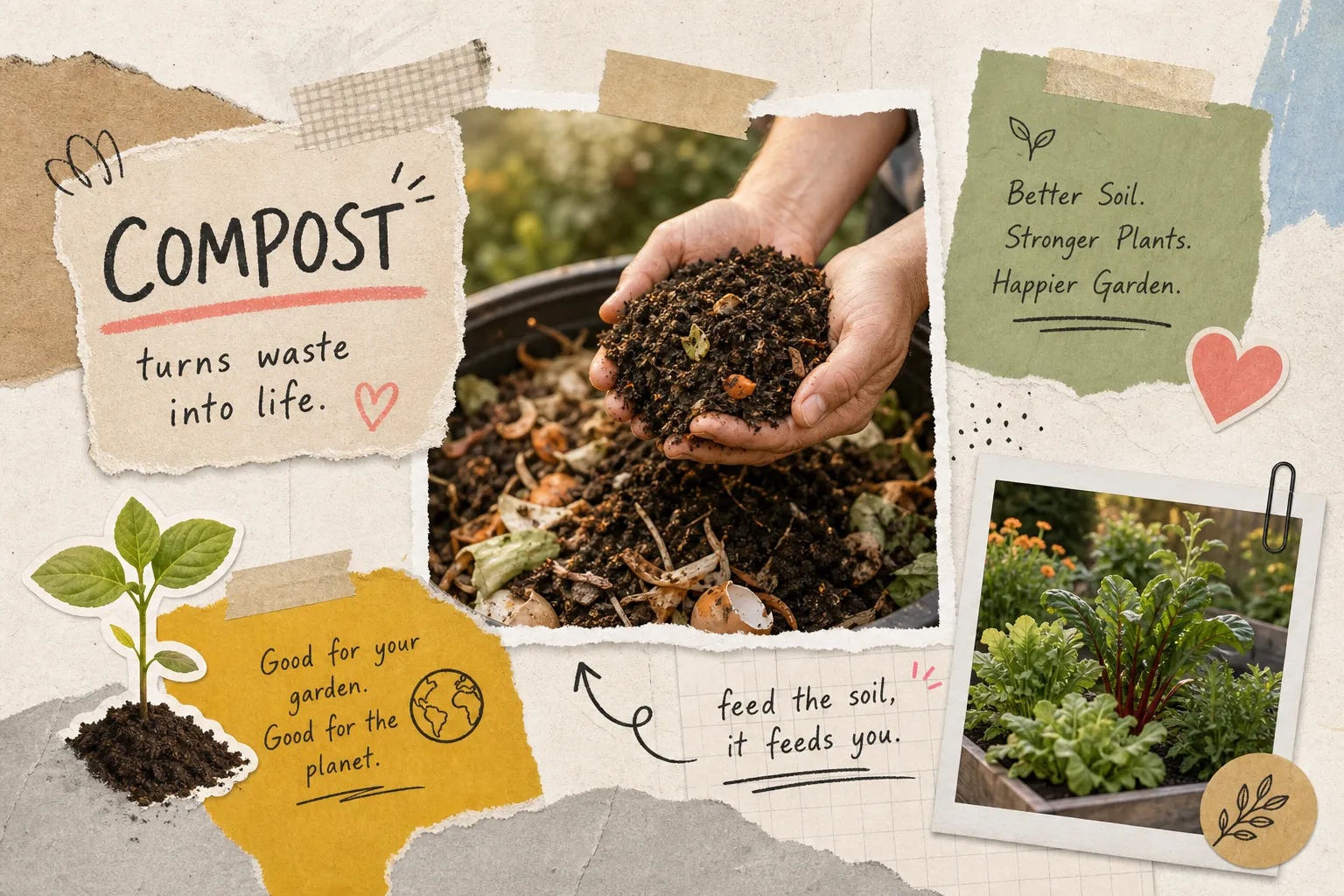
Compost improves soil structure and adds slow-release nutrients, so use it for mulching, general soil improvement and topping up beds close to planting time.
Work out exactly how much organic compost you need for raised beds, allotments and borders in Glasgow — plus bulk bag sizes, depth guide and prices.