




How to Prepare Your Garden for Winter in Scotland: 15 Essential Jobs
Looking for compost, topsoil or garden supplies?
Browse our full product range or get in touch for delivery across Glasgow and Scotland.
Autumn is one of the most important times of year for Scottish gardeners. As temperatures fall, rainfall increases and summer plants finish, a little preparation can protect your soil and make next spring's gardening much easier.
So, how should you prepare a garden for winter?
Start by clearing unhealthy plant material, controlling weeds, improving suitable beds with organic matter, protecting exposed soil with mulch, preparing vegetable beds for next year and checking whether any areas need additional soil or drainage work.
You don't need to completely clear or dig over every part of the garden.
The aim is to protect the soil, improve growing conditions where necessary and leave your garden ready for the next growing season.
This guide provides a practical autumn and winter garden checklist for gardeners across Glasgow, South Lanarkshire and the wider Scottish Central Belt.
Quick Winter Garden Checklist
Before winter arrives, consider these jobs:
Remove diseased and finished annual plants
Control persistent weeds
Add organic matter where needed
Apply suitable mulch to exposed soil
Prepare empty vegetable beds
Protect soil around established shrubs and trees
Check raised-bed soil levels
Address drainage problems
Avoid working waterlogged soil
Collect autumn leaves for leaf mould where practical
Clean pots and gardening equipment
Plan next year's vegetable beds
Check whether you need compost, manure, topsoil or mulch
Not every garden needs every job on this list.
Start by looking at what your own garden actually needs.
1. Clear Finished Plants — But Don't Over-Tidy
Once annual vegetables and summer plants finish growing, remove material that is diseased or unsuitable to leave in place.
Healthy plant material can often be composted.
But an autumn garden doesn't necessarily need to be completely stripped bare.
Seed heads, stems and other suitable vegetation can provide habitat and food for wildlife during colder months.
The objective should therefore be to remove problems rather than remove everything.
Pay particular attention to:
Diseased plants
Rotten fruit
Persistent weeds
Plants affected by significant pests or disease
Unwanted annual vegetation
Healthy organic material can often be recycled rather than discarded.
2. Improve Tired Garden Soil
After a full growing season, autumn provides an opportunity to assess your soil.
Look for areas that are:
Compacted
Low in organic matter
Difficult to work
Dry and structurally poor
Waterlogged
Heavily depleted after vegetable growing
Adding mature organic compost can increase organic matter and help improve soil structure.
Compost is particularly useful for:
Vegetable beds
Established borders
Raised beds
Allotments
General soil improvement
You don't necessarily need to dig it deeply into the ground.
Suitable mature compost can also be applied to the surface, allowing natural soil processes to gradually incorporate organic material.
If your soil is performing poorly, read our guide on how to improve poor garden soil.
3. Decide Whether Your Garden Needs Compost or Manure
Compost and manure are both organic soil improvers, but they aren't identical.
Organic compost
Organic compost is a versatile option for adding organic matter to garden soil.
Consider compost for:
General soil improvement
Raised beds
Borders
Vegetable gardens
Surface mulching
Well-rotted manure
Well-rotted manure can be particularly useful when preparing suitable productive ground where additional organic matter and fertility are desirable.
Consider manure for:
Vegetable plots
Allotments
Beds for hungry crops
Depleted productive soil
Don't automatically manure every vegetable bed.
Think about what you'll be growing next year first.
Some root vegetables, including carrots and parsnips, can develop poorly shaped roots when grown in ground that has been heavily manured immediately beforehand.
If you're unsure which material is appropriate, read our guide to well-rotted manure for gardens and allotments.
4. Protect Bare Soil Over Winter
One of the most useful autumn jobs is protecting exposed soil.
Bare ground can be affected by:
Heavy rainfall
Weed establishment
Surface erosion
Compaction
Fluctuating temperatures
Organic mulch provides a protective surface layer.
Depending on the area, suitable materials may include compost, well-rotted organic matter or woodchip.
Should you mulch before winter?
Yes, many garden areas can benefit from autumn or winter mulching.
Mulch can help:
Protect the soil surface
Reduce weed growth
Retain moisture
Add organic matter as suitable materials decompose
Protect the area around established plants
The type of mulch matters.
5. Use Woodchip Around Trees and Shrubs
Organic woodchips are particularly useful as a surface mulch around established woody plants.
Suitable applications include:
Trees
Shrubs
Fruit bushes
Established perennial areas
Garden paths
Between raised beds
Woodchip provides a physical covering over the soil and gradually breaks down.
How should you apply woodchip?
Remove significant weeds first.
Apply woodchip over the soil surface rather than mixing large quantities deeply into the active growing layer.
Most importantly:
Don't pile woodchip directly against tree trunks or plant stems.
Leave some space around the base.
A thick mound of constantly damp organic material directly against bark can create undesirable conditions.
For more information, see our complete organic woodchip guide.
6. Prepare Vegetable Beds for Next Year
Once the final vegetables have been harvested, don't simply forget about the beds until spring.
Autumn is an excellent time to think about next year's growing plan.
Start by removing:
Finished crops
Diseased material
Persistent weeds
Unwanted supports and ties
Then decide what will grow in each bed next year.
This matters because different crops have different soil requirements.
Beds for hungry crops
Where appropriate, well-rotted manure can be useful when preparing fertile soil for demanding crops.
General vegetable beds
Mature compost can add organic matter and improve soil condition.
Root vegetable beds
Avoid automatically adding large quantities of manure immediately before crops such as carrots and parsnips.
Planning ahead allows you to improve each bed according to what will actually grow there.
7. Don't Dig Waterlogged Soil
This is particularly relevant in Scotland.
Autumn and winter can bring prolonged wet conditions, especially across western Scotland.
Working heavy soil when saturated can damage its structure.
A simple test is to pick up a handful of soil.
If it is extremely sticky, smears easily and forms a dense wet mass, conditions may not be suitable for cultivation.
Waiting can sometimes be more beneficial than forcing yourself to complete a gardening job because the calendar says it's autumn.
This is especially important for heavy clay soils.
8. Consider No-Dig Gardening
You don't have to dig organic material deeply into every garden bed.
In a no-dig system, suitable composted organic material is applied to the soil surface.
Natural biological activity gradually incorporates material while minimising soil disturbance.
This can also help gardeners avoid repeatedly cultivating wet ground.
No-dig methods are increasingly popular for:
Vegetable beds
Allotments
Raised beds
Productive gardens
If you're interested in changing how you manage your beds, read our beginner's guide to no-dig gardening in Scotland.
9. Check Your Raised Beds
Raised beds often lose height over time.
This doesn't necessarily mean soil has disappeared.
Organic materials naturally decompose and the growing medium gradually settles.
At the end of the season, check:
Current soil depth
Compaction
Drainage
Organic-matter levels
Whether substantial additional volume is required
If the bed only needs organic matter, adding compost may be enough.
If the soil level has dropped substantially, you may need additional topsoil as well.
Remember:
Topsoil provides soil volume and structure.
Compost primarily improves existing soil.
If you're filling new beds or topping up existing ones, our raised-bed soil mix and volume guide explains how to calculate the amount required.
10. Check Drainage Before Winter Rain
Don't ignore areas that regularly remain waterlogged.
If part of the garden develops standing water after rainfall, investigate why.
Possible causes include:
Heavy soil
Compaction
Poor site drainage
Construction damage
Low ground
Surface runoff
Simply covering badly drained ground with a new layer of topsoil won't necessarily solve the underlying problem.
Similarly, continually adding compost isn't a substitute for correcting a serious drainage issue.
Identify the cause before spending money on materials.
11. Improve Heavy Soil Gradually
If your garden contains heavy clay soil, don't expect to transform it with one application of compost.
Clay has useful characteristics.
It can retain moisture and nutrients very effectively.
Its main difficulties arise when its structure becomes compacted or poorly aerated.
Regular additions of suitable organic matter can help improve workability and structure over time.
Use:
Mature organic compost
Suitable well-rotted manure
Other fully decomposed organic matter
Think of soil improvement as a long-term programme rather than a weekend repair.
12. Collect Autumn Leaves
Fallen leaves don't necessarily need to become waste.
Where appropriate, leaves can be collected and allowed to decompose into leaf mould.
Leaf mould is particularly useful as:
A soil conditioner
Organic mulch
Material for improving soil structure
It decomposes differently from conventional compost and can take considerable time to mature.
But if your garden produces large quantities of leaves every autumn, turning them into useful organic material is generally better than treating them simply as rubbish.
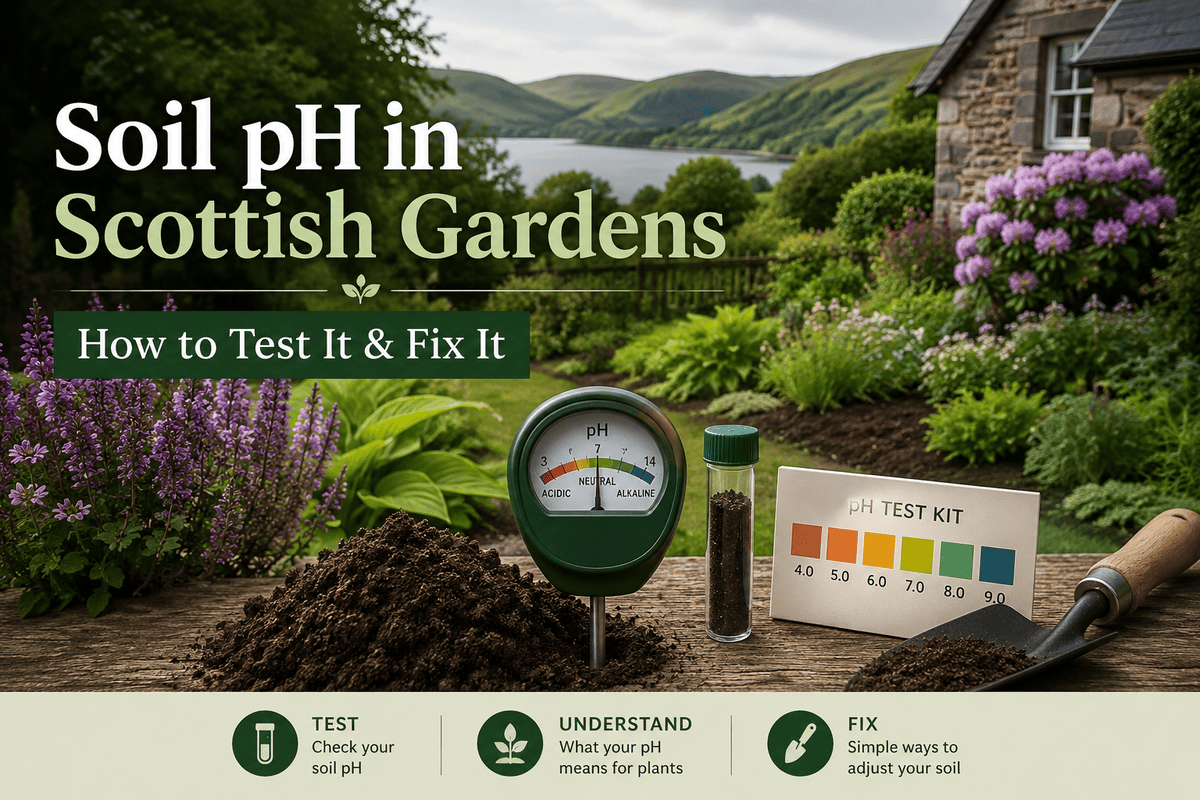
13. Check Soil pH Before Adding Lime or Other Amendments
Autumn is also a useful time to understand your soil chemistry.
But don't add lime simply because you've heard it is good for gardens.
Different plants prefer different pH conditions.
Changing soil pH without knowing the starting point can create new problems.
Use a soil pH test first.
If you've never tested your garden, read our guide to soil pH in Scottish gardens.
Testing is particularly worthwhile if:
Plants consistently struggle
You're establishing a vegetable garden
You're planning substantial soil amendments
You don't know the history of the ground
You suspect the soil is particularly acidic or alkaline
Measure first. Amend second.
14. Don't Apply Fertiliser Just Because Winter Is Coming
Plants need nutrients, but that doesn't mean every garden requires additional fertiliser in autumn.
Products such as Potash-Potassium have specific uses.
Potassium is an essential plant nutrient involved in several important plant processes, including flowering and fruiting.
However, adding nutrients your soil doesn't need isn't beneficial.
Consider:
What plants you're growing
Existing soil fertility
Previous fertiliser applications
Visible plant problems
Soil-test results
Don't confuse soil improvement with fertilisation.
Adding organic matter, correcting compaction and protecting soil are different tasks from supplying a specific plant nutrient.
15. Work Out How Much Material You Need Before Ordering
Autumn garden projects can use more material than expected.
Always measure first.
Use:
Length × Width × Depth = Volume
For example, a bed measuring:
10m × 2m = 20m²
If you're applying a 5cm layer:
20 × 0.05 = 1m³
That's approximately:
1,000 litres of material.
For a 3cm layer:
20 × 0.03 = 0.6m³
That's approximately:
600 litres.
For larger beds and allotments, this calculation can prevent both over-ordering and running out halfway through the job.
Our compost quantity guide provides more examples.
Compost, Topsoil, Manure or Woodchip: What Do I Need?
Here's a simple way to decide.
| Your autumn job | Material to consider |
|---|---|
| Improve tired garden soil | Organic compost |
| Improve suitable vegetable beds | Compost or well-rotted manure |
| Add significant soil depth | Topsoil |
| Top up raised beds | Topsoil + compost |
| Mulch trees and shrubs | Organic woodchip |
| Add organic matter | Compost |
| Prepare hungry-crop beds | Well-rotted manure |
| Cover productive soil | Compost/appropriate organic mulch |
| Create new planting areas | Topsoil + compost |
| Correct potassium deficiency | Potash where appropriate |
One product isn't automatically suitable for every problem.
Understanding the job first makes choosing the correct material much easier.
Frequently Asked Questions About Preparing a Garden for Winter
When should I start preparing my garden for winter in Scotland?
Late summer through autumn is a useful period for many winter-preparation jobs. The exact timing depends on your plants, local weather and soil conditions rather than a single calendar date.
Should I put compost on my garden before winter?
Mature compost can be applied to many established beds as organic matter or surface mulch. Whether your garden needs it depends on existing soil condition and what you intend to grow.
Should I put manure on my vegetable garden in autumn?
Well-rotted manure can be useful for suitable vegetable beds, particularly where you're preparing for nutrient-demanding crops. Don't automatically manure every bed without considering next year's planting.
Should I cover raised beds during winter?
You don't necessarily need a physical plastic cover. Protecting the soil surface with suitable organic material or appropriate cover crops can be beneficial.
Can I leave compost on top of the soil?
Yes. Mature compost can be applied to the soil surface rather than always being deeply dug in.
Is woodchip good for winter?
Woodchip can be useful as a surface mulch around established trees, shrubs and perennial areas. Keep it away from direct contact with trunks and stems.
Should I dig my garden before winter?
Not necessarily. No-dig gardening deliberately avoids routine digging. If you do cultivate your soil, avoid working it when saturated.
Should I fertilise my garden before winter?
Not automatically. Apply fertilisers according to plant and soil requirements rather than simply because winter is approaching.
Should I add topsoil every year?
No. Topsoil is primarily needed when additional soil depth or volume is required. Existing garden soil that simply needs more organic matter may benefit more from compost.
What should I do with fallen leaves?
Suitable leaves can be collected and allowed to decompose into leaf mould, providing useful organic material for future garden use.
Get Your Garden Ready for Winter
Preparing a garden for winter doesn't mean doing as much work as possible.
Good autumn gardening is about doing the right work.
Remove problem material.
Protect exposed soil.
Add organic matter where it's actually needed.
Avoid compacting wet ground.
Prepare vegetable beds according to next year's crops.
And make sure you're using the right material for each job.
Kelvin Compost supplies garden and landscaping materials across Glasgow, South Lanarkshire and surrounding areas of Scotland, including:
Whether you're preparing a small garden, an allotment, raised beds or a larger landscaping project, getting the soil right now can make next year's growing season much easier.
Need help choosing the right material for your autumn garden project?
Call Kelvin Compost on +44 7561 251350
Email info@kelvincompost.co.uk
Need Garden Supplies Delivered in Glasgow?
Organic compost, topsoil, manure and more across Scotland