




Well Rotted Manure Glasgow | Bulk Bags & Delivery for Gardens & Allotments
Looking for compost, topsoil or garden supplies?
Browse our full product range or get in touch for delivery across Glasgow and Scotland.
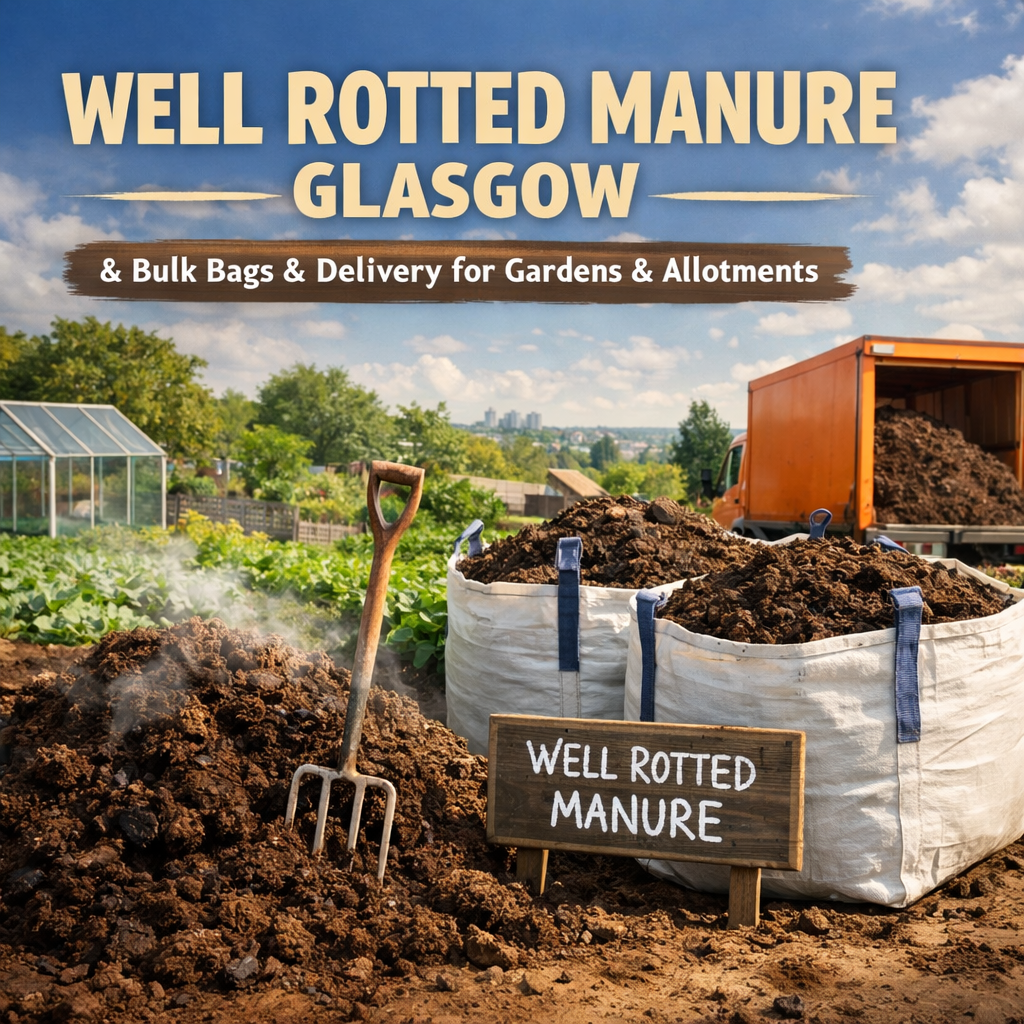
Well rotted manure is animal manure and bedding that has fully broken down into a dark, crumbly, soil-like material. It is safe to use as a natural soil improver because it will not scorch plant roots the way fresh manure can.
Kelvin Compost supplies well rotted manure in 850L bulk bags (from £59.99, prices include tax) with delivery across Glasgow, East Kilbride, South Lanarkshire and the wider Central Belt. 10 and 20 tonne loose loads, depot uplift and small HIAB drop-off are also available.
Looking for a natural way to feed Scottish soil? Well rotted manure improves structure, holds moisture and slowly releases nutrients — ideal for allotments, vegetable beds, borders and community gardens across Glasgow and the West of Scotland.
What is well rotted manure?
Well rotted manure is manure mixed with bedding (such as straw) that has been left to compost until it:
- Looks dark and soil-like
- Has little or no strong farmyard smell
- Is crumbly rather than sticky or steaming hot
- Is safe to dig in or spread around established plants
Fresh manure is too strong for direct use on growing plants. It can burn roots and lock up nitrogen while woody bedding breaks down. Well rotted manure has already completed that process, so it conditions soil instead of stressing plants.
Benefits of well rotted manure for gardens
It suits veg plots, fruit bushes, roses, borders, allotments, school gardens and larger landscaping jobs.
Well rotted manure vs compost — what’s the difference?
They are not the same, and many gardeners use both. Manure builds fertility and organic matter; PAS 100 compost improves structure and provides a cleaner, consistent growing amendment. Kelvin Compost supplies both, plus topsoil and topsoil mix, so you can match the product to the job.
How to use well rotted manure (step-by-step)
- Choose the right time — Autumn mulch on bare beds is ideal; spring (March–April) works well just before planting. On sandy soils, late winter is often better.
- Spread 5–8 cm on the surface of bare soil, breaking up large lumps.
- Keep clear of stems — don’t pile manure against plant crowns or trunks.
- Dig in or leave as mulch — dig into the top soil for faster mixing, or leave on top for no-dig beds and let worms pull it down.
- Plant after it settles — for new beds, allow a short settling period before sowing tender crops.
- Hungry crops love it — potatoes, brassicas, beans, courgettes, fruit bushes and roses respond especially well. Use more carefully on root crops if soil is already rich.
Quick mix tip for raised beds: blend roughly 1 part well rotted manure with 3 parts compost or topsoil mix when filling or refreshing beds.
How much well rotted manure do I need?
Use:
Volume (m³) = length (m) × width (m) × depth (m)
Example: a 5 m × 2 m bed with a 5 cm (0.05 m) dressing needs about 0.5 m³. One 850L bulk bag (~0.85 m³) covers that bed with some spare for borders.
For large allotment sites, school grounds or farms, 10 or 20 tonne loose loads are usually better value than many bags.
Buy well rotted manure in Glasgow — delivery options
Kelvin Compost delivers from South Lanarkshire across the West Coast of Scotland:
- Glasgow and surrounding neighbourhoods
- East Kilbride and South Lanarkshire (£15 typical local delivery charge)
- Hamilton, Rutherglen, Cambuslang and nearby towns
- Allotments, schools and community gardens across the Central Belt
- Larger Scottish sites by arrangement
Fulfilment options:
- 850L bulk bags — easy for gardens and small plots
- 10 / 20 tonne loose loads — allotments, schools, farms, landscapers
- Small HIAB — tight drives, shared access, restricted sites
- Depot uplift — collect if you prefer
Use code INTERNET at checkout for 5% off 850L sacks (when the offer is active).
Shop Well Rotted Manure · Tel: +44 7561 251350 · info@kelvincompost.co.uk
Who is this manure for?
- Home gardeners refreshing borders and veg beds
- Allotment holders rebuilding tired soil each season
- Schools and community gardens needing reliable bulk supply
- Landscapers and growers who want consistent, well-rotted material without waiting for a farm heap to mature
Every purchase supports ASAP (After School Activities Programme SC037399) — Kelvin Compost is the charity’s trading arm, so profits fund local recreational projects.
Frequently asked questions
What is well rotted manure used for?
Improving soil structure, adding organic matter and feeding hungry plants in vegetable beds, allotments, borders and fruit growing areas.
Is well rotted manure safe to use around plants?
Yes, when it is fully broken down. Fresh manure can scorch roots; well rotted manure is the garden-ready form.
Is well rotted manure the same as compost?
No. Manure comes from animal waste and bedding; compost is usually plant-based organic matter processed into a stable soil improver. Both are useful; many plots benefit from using them together.
When should I apply manure on an allotment?
Autumn for surface mulching, or spring before planting. Sandy soils often do best with late-winter applications.
Do you deliver manure in Glasgow?
Yes. Kelvin Compost delivers well rotted manure across Glasgow, South Lanarkshire and the Central Belt, with HIAB and bulk tonne options available.
Can I buy manure in bulk bags?
Yes. 850L bulk bags are available online, with larger 10 and 20 tonne loads on request.
How much does manure delivery cost?
East Kilbride and surrounding areas typically have a £15 delivery charge. Other postcodes are quoted by location and load size. Product page prices include tax.
Need Garden Supplies Delivered in Glasgow?
Organic compost, topsoil, manure and more across Scotland