




What Is Manure and How Do You Use It in the Garden? A Complete Guide
Looking for compost, topsoil or garden supplies?
Browse our full product range or get in touch for delivery across Glasgow and Scotland.
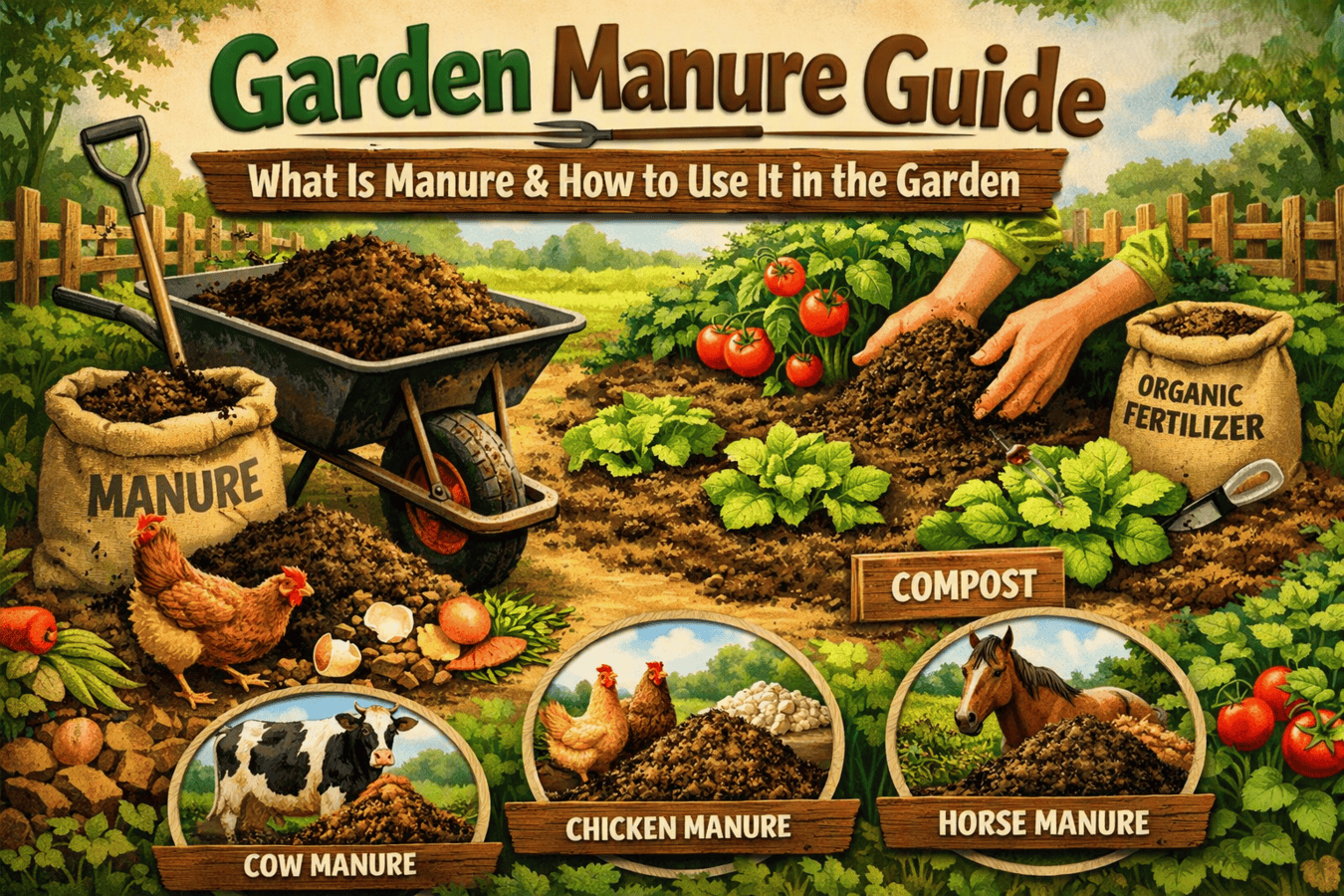
What Is Manure?
Garden manure is organic material originating from livestock such as horses, cattle and other farm animals.
It commonly contains both animal waste and bedding material. As these materials decompose, they gradually transform into a dark, crumbly organic soil improver.
There is an important difference between fresh manure and well-rotted manure.
Fresh manure has undergone little decomposition. Well-rotted manure has been allowed to break down over time, making it more suitable for general garden use.
What does well-rotted manure look like?
Good well-rotted manure is typically:
Dark brown
Crumbly or soil-like
Well decomposed
Much less recognisable as the original manure and bedding
Easier to spread and incorporate into soil
If large quantities of fresh straw or bedding are still clearly visible, decomposition may not yet be complete.
What Is Manure Used For in the Garden?
Manure is primarily used to improve soil by adding organic matter and slowly contributing plant nutrients.
Gardeners commonly use well-rotted manure in:
Vegetable gardens
Allotments
Raised beds
Flower beds and borders
Around established shrubs
Fruit-growing areas
Poor or depleted garden soils
Heavy soils that need structural improvement
Light soils that struggle to retain moisture
Unlike a growing medium such as topsoil, manure is generally used as a soil improver rather than as a replacement for soil.
What Are the Benefits of Manure?
Adding well-rotted manure can improve more than simply the nutrient content of your garden.
1. Adds organic matter to soil
One of manure's most important benefits is its organic matter.
Organic matter supports the physical and biological condition of soil. Regularly improving soil with suitable organic materials can help maintain a productive growing environment.
2. Improves soil structure
Garden soil can become compacted, particularly after repeated cultivation or heavy foot traffic.
Adding well-rotted organic matter can help create a more workable soil structure.
This is particularly valuable for heavy soils.
3. Helps soil retain moisture
Organic matter can improve the soil's ability to hold water.
This can be particularly beneficial in lighter soils that dry quickly during warmer weather.
Improving moisture retention does not mean making the soil permanently wet. The goal is healthier soil that can hold useful moisture while maintaining suitable structure.
4. Adds plant nutrients
Manure contains plant nutrients that become available as organic material continues to break down.
Unlike many concentrated fertilisers, manure is valued not only for nutrients but also for the organic matter it contributes to the soil.
5. Supports healthy soil
Healthy garden soil is an active ecosystem.
Adding decomposed organic matter provides material that interacts with soil organisms and contributes to the ongoing nutrient cycle.
6. Can be used as mulch
Well-rotted manure can also be applied to the soil surface around suitable established plants.
As a mulch, organic matter can help reduce moisture loss, suppress some weed growth and gradually contribute organic material to the soil.
Is Manure Good for Vegetable Gardens?
Yes. Well-rotted manure can be an excellent soil improver for vegetable gardens and allotments, particularly for crops that benefit from fertile, organic-rich soil.
It is commonly incorporated into vegetable beds before planting or used when preparing beds between growing seasons.
Vegetables that can benefit from fertile soil include many heavy-feeding crops, such as:
Pumpkins
Squashes
Courgettes
Cabbages
Cauliflowers
Broccoli
Leeks
However, not every vegetable needs freshly manured soil.
This is why experienced gardeners often rotate crops and apply manure according to what will be planted in a particular bed.
Which Plants Like Manure?
Many established plants and productive crops benefit from soil containing well-decomposed organic matter.
Well-rotted manure can be particularly useful around:
Roses
Roses generally perform well in fertile soil containing plenty of organic matter. Well-rotted manure can be used as part of soil preparation or as an appropriate mulch around established plants.
Avoid piling material directly against the stems.
Fruit trees and bushes
Established fruit trees and bushes can benefit from organic matter applied around their root zone.
Again, leave a gap around the trunk or main stems rather than piling manure directly against them.
Vegetable crops
Hungry vegetable crops can make good use of fertile soil improved with organic matter.
Established borders
Beds containing established shrubs and perennials can also benefit from periodic additions of well-rotted organic material.
Are There Plants That Don't Like Manure?
Manure isn't automatically the best choice for every plant.
Some plants prefer relatively lean or free-draining conditions and may not benefit from heavily enriched soil.
You should also be more careful when preparing beds for certain root crops.
For example, applying large amounts of manure immediately before growing carrots or parsnips may encourage irregular or forked roots.
A better approach can be to grow these crops in ground that was enriched for a previous crop rather than heavily manuring immediately before sowing.
The key lesson is simple:
Use manure according to the needs of your soil and plants rather than assuming more manure will always produce better results.
When Is the Best Time to Put Manure on a Garden?
The best time depends on your soil, plants and how you intend to use the manure.
For many UK gardens, well-rotted manure can be incorporated into soil during spring preparation.
It can also be used at other suitable points when preparing beds, provided nutrient loss and the requirements of the next crop are considered.
For mulching, late winter into early spring is often a useful period because organic matter can be applied before the main growing season.
If you're preparing a vegetable bed, adding well-rotted organic material before active growth gives the soil time to settle before planting.
Can You Put Manure Directly on Soil?
Yes — provided you're using well-rotted manure and applying it appropriately.
There are two common approaches.
Method 1: Digging manure into the soil
Spread well-rotted manure across the bed and incorporate it into the upper soil.
This is useful when preparing:
Vegetable plots
New borders
Raised beds
Poor garden soil
Method 2: Using manure as a surface mulch
Spread well-rotted manure over the soil surface around established plants.
Soil organisms and natural weathering will gradually help incorporate the organic material.
This method is particularly useful for gardeners following low-dig or no-dig approaches.
How Much Manure Should You Add to Soil?
There is no perfect quantity for every garden because the appropriate amount depends on:
Existing soil condition
Type of manure
Plants being grown
Previous soil improvements
Whether you're digging it in or mulching
As a general guide for improving garden soil, an application in the region of 5–10 kg of organic matter per square metre may be used.
You do not necessarily need to add large quantities every year.
Soil that already contains plenty of organic matter may need less frequent applications than depleted ground.
Can You Use Too Much Manure?
Yes. More manure does not always mean better soil.
Excessive applications can result in unnecessarily high nutrient levels and increase the risk of nutrients being lost from the soil.
Over-enriched ground may also be unsuitable for certain plants.
The objective should be to maintain healthy soil — not continually add as much organic material as possible.
Why Should Manure Be Well Rotted?
This is one of the most important questions when buying manure for a garden.
Well-rotted manure has already undergone substantial decomposition, making it more suitable for direct garden use than fresh manure.
Fresh manure can contain higher levels of readily available nutrients and undecomposed material. It is therefore generally preferable to compost or mature it before normal garden use.
Well-rotted manure is also easier to:
Spread
Dig into beds
Apply as mulch
Mix with soil
Handle around established planting
When buying manure for a garden or allotment, checking that it is properly matured is therefore important.
Manure vs Compost: What's the Difference?
Manure and compost are both organic soil improvers, but they aren't exactly the same product.
Manure originates primarily from animal waste and often animal bedding.
Garden or green compost is created through the controlled decomposition of organic materials, typically predominantly plant-derived materials.
Both can add valuable organic matter to soil.
Choose manure when:
Preparing fertile vegetable beds
Improving depleted soil
Growing hungry crops
Adding organic matter to an allotment
Improving established beds
Choose compost when:
You need a versatile general-purpose soil improver
Improving a wide range of beds and borders
Adding organic matter to existing soil
Mulching
Following a general soil-improvement programme
You don't necessarily have to choose one forever.
A garden can benefit from different organic materials at different times depending on what is being grown.
Manure vs Fertiliser: Are They the Same?
No.
Manure is an organic soil improver that contributes both organic matter and nutrients. Fertiliser is primarily used to supply specific plant nutrients.
This distinction matters.
If your soil structure is poor, simply applying concentrated fertiliser doesn't provide the same organic-matter benefit as adding well-rotted manure or compost.
At the same time, manure isn't necessarily a complete substitute for every fertiliser.
Some nutrient-demanding plants may still require additional feeding depending on the condition of the soil and their particular requirements.
Can You Use Manure in Raised Beds?
Yes.
Well-rotted manure can be incorporated into raised-bed soil, particularly where vegetables will be grown.
However, manure shouldn't normally be the only material used to fill a deep raised bed.
A raised bed needs an appropriate growing medium with sufficient soil structure.
A practical combination may include:
Topsoil + organic compost + well-rotted manure where appropriate
Topsoil provides the main growing medium, while compost and manure contribute organic matter.
Is Manure Good for Clay Soil?
Well-rotted manure can be particularly valuable for heavy soils because adding organic matter helps improve soil structure.
Rather than trying to completely replace clay soil, repeated additions of suitable organic matter can gradually make it easier to work.
This can help create a better environment for plant roots.
Is Manure Good for Sandy Soil?
Yes.
Sandy soils tend to drain quickly and may struggle to retain both moisture and nutrients.
Adding organic matter such as well-rotted manure can improve the soil's capacity to retain useful moisture and nutrients.
Regular soil improvement can therefore be particularly worthwhile on light ground.
Can Manure Be Used in a No-Dig Garden?
Yes.
Well-rotted manure is commonly used as an organic mulch in no-dig growing systems.
Instead of digging it deeply into the soil, gardeners spread decomposed organic material across the surface.
Soil organisms gradually incorporate it while the soil itself is disturbed as little as possible.
This approach can be particularly useful in vegetable gardens and allotments.
Can Fresh Manure Be Used in the Garden?
Fresh manure requires considerably more care than well-rotted manure.
For most home gardeners, allowing manure to decompose properly before applying it around plants is the simpler approach.
Fresh material can contain high levels of readily soluble nutrients and may also contain substantial undecomposed bedding.
It should not simply be treated in the same way as mature, well-rotted manure.
If you're buying manure specifically for immediate garden use, well-rotted manure is generally the more practical choice.
Frequently Asked Questions About Manure
What does manure do to soil?
Manure adds organic matter and plant nutrients to soil. Well-rotted manure can help improve soil structure, moisture retention and fertility while supporting the soil's natural biological processes.
Is manure good for all plants?
No. Many plants benefit from fertile soil containing organic matter, but some plants prefer less fertile conditions. Certain root vegetables, including carrots and parsnips, may also perform poorly in ground that has been heavily manured immediately before sowing.
Is well-rotted manure better than fresh manure?
For most everyday garden applications, well-rotted manure is easier and safer to use because much of the original material has already decomposed.
Can I plant directly into manure?
Manure is primarily a soil improver rather than a standalone growing medium. It is usually better incorporated into suitable soil or applied as an organic mulch rather than used alone as the material plants grow in.
How often should I add manure to my garden?
It depends on your soil. Ground low in organic matter may benefit from more regular improvement, while fertile soil with a good organic-matter content may require less frequent applications.
Can I put manure around established plants?
Well-rotted manure can be applied as organic mulch around many established plants. Avoid piling it directly against trunks or stems.
Is manure good for tomatoes?
Tomatoes are productive plants that need fertile soil, so soil improved with well-rotted organic matter can provide a good foundation. Additional feeding may still be needed during growth and fruit production.
Is manure good for potatoes?
Organic-rich soil can be useful for potatoes, and well-rotted manure is commonly incorporated when preparing suitable potato-growing ground.
Is manure good for lawns?
Manure is generally more commonly used for vegetable beds, borders and soil improvement than as a direct lawn treatment. When creating a new lawn, good-quality topsoil and proper ground preparation are normally more important.
Does manure replace compost?
Not necessarily. Both manure and compost can improve soil, but their origins and characteristics differ. Many gardeners use both depending on the crop, season and condition of the soil.
Choosing Manure for Your Garden
The most important thing to look for when buying manure for immediate garden use is maturity.
Properly well-rotted manure should be dark, decomposed and suitable for use as an organic soil improver.
Consider:
Whether the manure is well rotted
How much your project requires
What you're planning to grow
The current condition of your soil
Whether you're improving beds or using it as mulch
Whether bulk delivery would be more practical than small bags
For larger gardens, allotments and landscaping projects, buying manure in bulk can be considerably more practical than transporting numerous small bags.
Well-Rotted Manure for Gardens and Allotments in Glasgow
If you're improving a vegetable garden, preparing an allotment or adding organic matter to established beds, well-rotted manure provides a natural way to improve your soil while contributing useful plant nutrients.
Kelvin Compost supplies well-rotted manure for home gardeners, allotment holders, community growing projects and larger landscaping requirements.
Our manure is available in 850-litre bulk bags, with larger loose-load options available for bigger projects.
Delivery is available across Glasgow, East Kilbride, South Lanarkshire and the wider Central Belt of Scotland, subject to location and delivery requirements.
Need manure for your garden?
Order: Well-Rotted Manure from Kelvin Compost
Call: +44 7561 251350
Email: info@kelvincompost.co.uk
Whether you're preparing this year's vegetable beds or improving tired garden soil, choosing properly matured manure gives your plants something even more important than a quick feed — better soil to grow in.
Need Garden Supplies Delivered in Glasgow?
Organic compost, topsoil, manure and more across Scotland