




Weedkiller in Manure: Spot Aminopyralid Damage | Guide
Looking for compost, topsoil or garden supplies?
Browse our full product range or get in touch for delivery across Glasgow and Scotland.
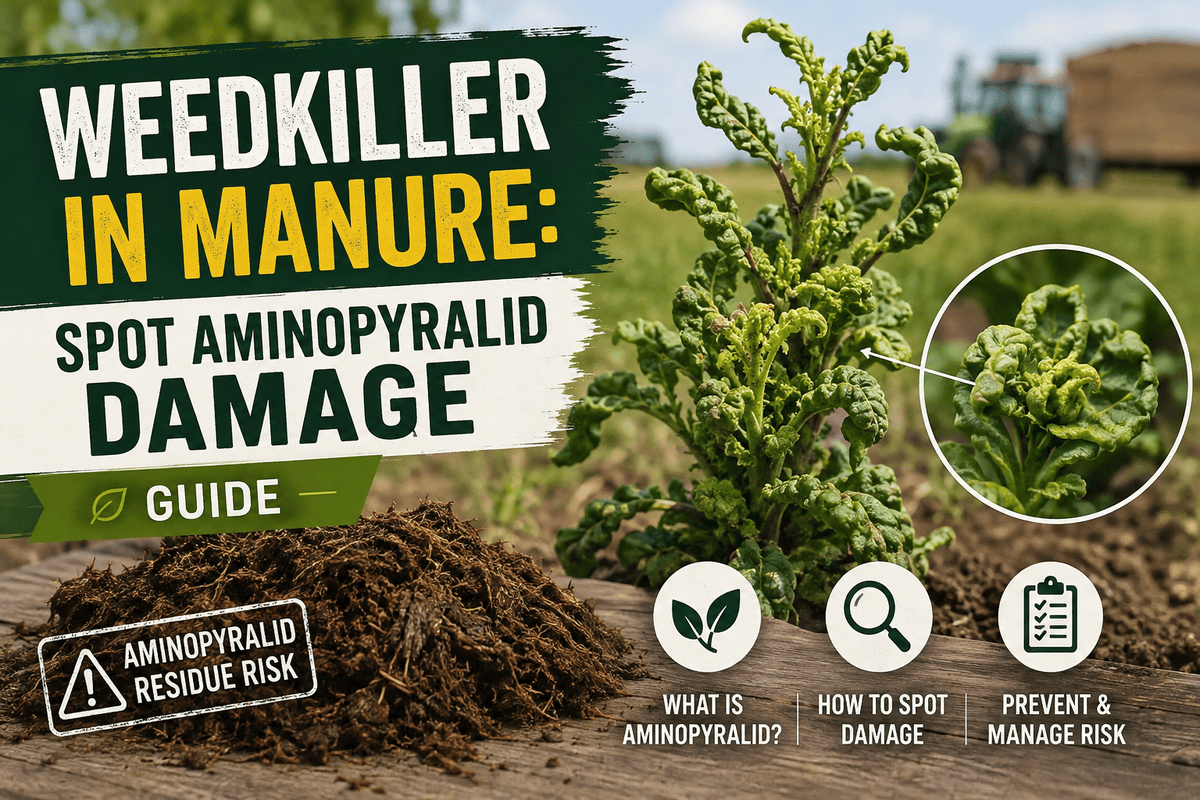
Short answer: if your tomatoes, potatoes or beans have curled, cupped, fern-like leaves with prominent veins and stunted shoot tips, the likely cause is aminopyralid or clopyralid herbicide residue in manure or compost you spread. It is not a disease, it isn't your fault, and it can persist in the soil for a year or more. The only reliable protection is using certified compost and testing any unknown manure before it touches your beds.
This is the single most destructive thing that can happen to a vegetable plot, and most gardeners have never heard of it until it happens to them. Here's how to recognise it, how to test for it, what to do if you've already spread it, and how to make sure it never happens again.
What aminopyralid and clopyralid actually are
Both are selective herbicides used to control broad-leaved weeds — docks, thistles, nettles — in grassland and pasture. They work extremely well, and they are approved for that use.
The problem is what happens next. The chemical does not break down in the animal that eats the treated grass, and it does not break down during composting either. It passes through the horse or cow, survives in the muck heap, and stays active in the finished manure.
That means a residue sprayed on a field can end up on your allotment two years later, still potent enough to deform a tomato plant. According to the RHS, aminopyralid is responsible for most incidents; clopyralid turns up in both agricultural products and some lawn weedkillers, which is why contaminated grass clippings can cause the same trouble.
Manufacturers place strict stewardship conditions on how treated material may be used, but those conditions depend on every person in the chain — farmer, stable, muck-heap owner, gardener — knowing and following them. In practice the chain frequently breaks, usually with nobody acting in bad faith. Somebody gives away free horse muck; nobody involved knows where the hay came from.
The symptoms: what to look for
Damage usually shows within two to three weeks of planting into affected material, and it is quite distinctive once you know it.
- Curled and cupped leaves — margins rolling inward or downward
- Fern-like or feathery growth — leaflets narrowing until foliage looks like a fern rather than a tomato
- Prominent, raised vein markings on the leaf surface
- Pale, narrow, distorted shoot tips — the growing point becomes twisted and thin
- Stunted growth — plants sit and sulk rather than growing away
- Fruit, where it forms at all, may be small and misshapen
Which plants are most sensitive
| Highly susceptible | Less affected |
|---|---|
| Tomatoes | Brassicas (cabbage, kale, sprouts) |
| Potatoes | Sweetcorn |
| Beans and peas | Onions, leeks and garlic |
| Chillies and peppers | Most grasses |
| Phlox, delphiniums, roses | Squash and courgettes (moderate) |
The legumes are useful early warning indicators — beans and peas react fast and unmistakably, which is exactly why they're used for testing.
How to tell it apart from other problems. Herbicide damage affects new growth first and hits several different plants across a bed at once, always where the suspect material was spread. Virus damage tends to mottle and yellow rather than distort. Nutrient deficiency shows as discolouration, not curling. Frost damage is blackened and localised. Drought wilts rather than cups. If several unrelated species in one bed are all producing twisted new growth, and the neighbouring bed that got no manure is fine, you have your answer.
How to test manure before you use it
If you're offered manure from an unknown source — and "free horse muck" adverts are exactly the unknown source in question — spend three weeks testing it before it goes anywhere near your plot. The test is simple and costs nothing.
The bean pot test (bioassay):
- Fill three pots with a 50/50 mix of the suspect manure and a compost you know is clean.
- Fill three more pots with the clean compost alone — these are your controls. Skipping the controls is the most common mistake; without them you have nothing to compare against.
- Sow broad beans or peas in every pot — two or three seeds each.
- Keep them all in the same place, watered the same, on a windowsill or in a greenhouse.
- Wait two to three weeks and compare.
If the plants in the manure mix show twisted, cupped or fern-like growth while the controls look normal, the manure is contaminated. Do not use it. The difference, when it's there, is obvious — you won't be squinting at subtle differences.
If both sets look identical and healthy, the manure is very likely fine.
If you've already spread it
This is the bad news: there is no product you can apply to neutralise it. The residue is broken down by soil bacteria, and that takes time.
What actually helps:
- Remove any loose mulch you can physically lift, and dispose of it — do not add it to your compost heap, or you'll simply move the problem.
- Cultivate the affected soil repeatedly during the warmer months. This is the one situation where the RHS advises turning the soil: bacterial breakdown needs the residue mixed into living soil, warmth and oxygen. Material sitting in a heap barely degrades at all.
- Grow the resistant crops in the meantime. Sweetcorn, brassicas, onions and leeks will generally crop normally while the ground recovers, so the season isn't entirely lost.
- Be patient. The RHS advises that manure used as a mulch may take a year or possibly longer to become safe, and residues in stored manure can persist two years or more. Reported recovery times range from about four months for light contamination upward.
- Retest before returning to tomatoes and potatoes — repeat the bean pot test with soil from the affected bed.
Report it. Contact the supplier of the manure — they may not know, and they need to. You can also report to the HSE incident reporting page and to Corteva, the manufacturer of both chemicals. Reports are what drive stewardship changes, and this problem persists partly because most incidents go unreported.
How to avoid it completely
1. Know the source, or don't use it
The risk sits almost entirely with uncertified manure from an unknown supply chain — free horse muck from a stable that can't tell you where its hay was grown, a trailer load from a farm you don't know. If nobody can answer "was the grazing or hay treated with aminopyralid?", treat the answer as yes until a bean test says otherwise.
2. Understand why bedding matters
Manure based on straw bedding carries lower risk, because aminopyralid does not currently hold approval for use on cereal crops. Manure from animals fed on treated hay or silage, or bedded on treated material, is where the problem lives. It's a useful question to ask, though not a guarantee on its own.
3. Use PAS 100 certified compost
PAS 100 is the British Standards Institution specification for composted materials. Certification requires a controlled, monitored process — sustained high temperatures that destroy weed seed and pathogens, plus screening and testing for contaminants and stability. Certified producers have to know and document what goes into the process, which is precisely the traceability that free muck lacks.
It is not a magic shield, but it converts an unknown risk into a managed one, backed by an auditable standard rather than a stranger's word.
4. Be careful with grass clippings too
Clopyralid appears in some lawn weedkillers. Clippings from a treated lawn — yours or a neighbour's — can carry residue into a home compost heap and cause the same damage on a smaller scale. If a lawn has been treated, keep its clippings out of the heap for at least the rest of the season.
5. Test anything you're unsure about
Three weeks and six flowerpots against the loss of a growing season is not a difficult trade.
Why this matters more if you garden no-dig
In a conventional bed, manure is dug into a much larger volume of soil and diluted. In a no-dig bed, your plants root directly into the applied layer, at full strength, for their first critical weeks. The same contaminated load does considerably more damage.
There's a second sting: the standard remediation advice is to cultivate the soil repeatedly, which is the one thing a no-dig gardener has spent years avoiding. Prevention isn't just better than cure here — for no-dig growers it is very nearly the only option.
Our compost
All organic compost from Kelvin Compost is BSI PAS 100 certified, peat-free and chemical-free. Our well-rotted manure is supplied for garden and allotment use, and we're happy to discuss sourcing with any customer who asks — that conversation is one you should be able to have with any supplier, and it's a reasonable question to ask before you buy.
Frequently asked questions
Why are my tomato leaves curling and going fern-like? The most likely cause is aminopyralid or clopyralid herbicide residue in manure or compost applied to the bed. The characteristic signs are cupped and curled leaves, narrow fern-like growth, prominent leaf veins and distorted, pale shoot tips, appearing on new growth within two to three weeks.
What is aminopyralid? Aminopyralid is a selective herbicide used to control broad-leaved weeds in grassland. It passes through grazing animals and survives composting, so it can remain active in manure long after the original spray — which is how it reaches gardens.
How long does aminopyralid stay in the soil? Manure used as a mulch may take a year or longer to become safe, and residues in stored manure can persist for two years or more. Breakdown depends on soil bacteria, so it happens fastest when the material is mixed into warm, living soil.
How do I test manure for weedkiller? Mix the suspect manure 50/50 with compost you know is clean, fill three pots, and fill three more with the clean compost alone as controls. Sow broad beans or peas in all six, keep them in identical conditions, and compare after two to three weeks. Twisted or fern-like growth in the manure pots confirms contamination.
Which crops are affected by aminopyralid? Tomatoes, potatoes, beans, peas, chillies and peppers are the most susceptible edibles, along with ornamentals such as phlox, delphiniums and roses. Brassicas, sweetcorn, onions, leeks and grasses are far less affected and can usually be grown while the soil recovers.
Can I fix contaminated soil? There is no product that neutralises the residue. Remove any loose mulch, cultivate the soil repeatedly through the warmer months to help soil bacteria break it down, grow resistant crops meanwhile, and retest with beans before returning to tomatoes or potatoes.
Is free horse manure safe to use? Not automatically. Free manure from an unknown source is exactly the highest-risk category, because nobody in the chain can confirm whether the grazing or hay was treated. Test it with the bean pot method before using it, or use certified compost instead.
Does PAS 100 certification prevent this? PAS 100 requires a controlled, monitored composting process with documented inputs, sustained high temperatures and testing for contaminants and stability. It converts an unknown risk into a managed one backed by an auditable standard. It is the strongest practical safeguard available to a gardener buying material in.
Can contaminated compost be composted again to fix it? No. The chemical survives composting — that is the whole reason it reaches gardens in the first place. Never add suspect material to a compost heap; you will simply spread the problem to everything else in it.
Buy compost you can trace
If you'd rather not gamble a growing season on an unknown trailer load, we supply BSI PAS 100 certified organic compost across Glasgow, East Kilbride, South Lanarkshire and the Central Belt — in 850L bulk bags or 10 and 20 tonne loose loads, with HIAB delivery for tight access and depot uplift from Chapelton.
Browse our products · call 07561 251350 · email info@kelvincompost.co.uk · use code INTERNET for 5% off 850L sacks.
Need Garden Supplies Delivered in Glasgow?
Organic compost, topsoil, manure and more across Scotland