



Organic Compost: Benefits, Uses & Buying Guide | Kelvin Compost
Looking for compost, topsoil or garden supplies?
Browse our full product range or get in touch for delivery across Glasgow and Scotland.
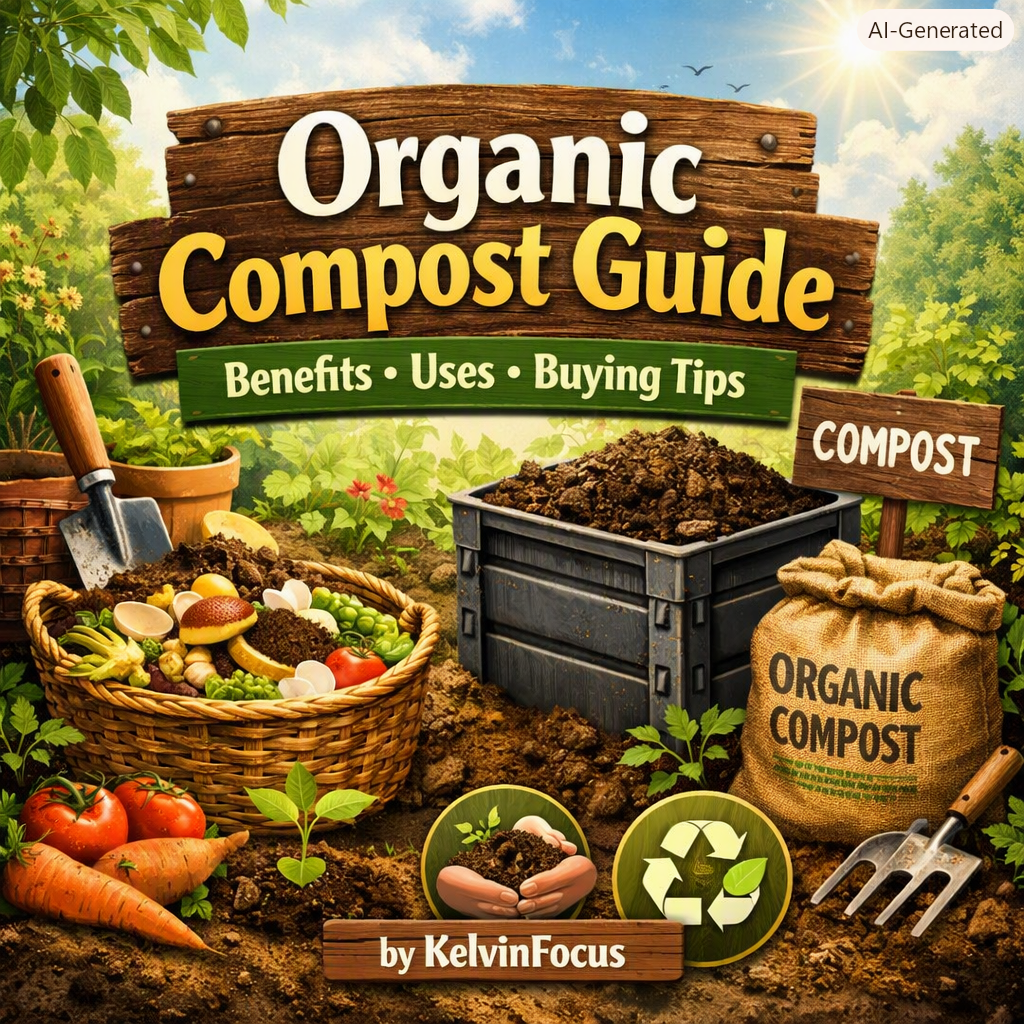
Organic Compost: Benefits, Uses and How to Choose the Right Compost
Organic compost is one of the most useful materials you can add to a garden, allotment or landscaping project. It improves the condition of existing soil, adds valuable organic matter and creates a healthier environment for roots, earthworms and soil microorganisms.
Whether you are restoring a tired vegetable plot, improving heavy garden soil, preparing new borders or filling raised beds, choosing the right compost can make a noticeable difference to long-term growing performance.
This guide explains what organic compost is, what it does, how to use it and how to calculate the quantity required for your project.
What Is Organic Compost?
Organic compost is a soil improving material produced by the controlled decomposition of biodegradable matter such as garden trimmings, leaves and other plant-based materials.
During composting, microorganisms break the original materials down into a dark, mature and crumbly product. When incorporated into garden soil, this compost adds organic matter and helps improve the physical condition of the soil.
The Royal Horticultural Society describes garden compost as a soil improver that can increase soil fertility, improve structure and support better water-holding capacity.
Quick answer
Organic compost is primarily a soil improver. It is added to existing soil to improve its structure, moisture management, nutrient-holding ability and biological activity.
It should not automatically be treated as a direct replacement for topsoil, fertiliser or specialist potting compost. The correct product depends on what you are planting and where you are growing it.
Is Organic Compost Always Peat-Free?
No. The terms “organic” and “peat-free” do not mean exactly the same thing.
In gardening, “organic compost” generally describes compost made from decomposed organic materials. However, a bag or product described as organic is not necessarily free from peat. The RHS recommends checking the product information because compost marketed as organic or environmentally friendly may still contain peat.
A genuinely peat-free product should be clearly labelled as peat-free.
Choosing peat-free compost helps reduce demand for peat extraction. Peatlands are important habitats and major carbon stores, while damaged peatlands can release stored carbon into the atmosphere.
Kelvin Compost describes its organic compost and soil products as peat-free and chemical-free, with compost supplied to gardens, allotments, schools and community projects across Glasgow and surrounding areas.
What Are the Benefits of Organic Compost?
1. It improves soil structure
Soil structure describes the way soil particles bind together and the spaces that exist between them.
Adding mature compost can make dense soil easier to work while helping very light soil hold together more effectively. This creates a better balance between moisture retention, drainage and air movement around plant roots.
Organic matter is particularly valuable in gardens with compacted soil, heavily cultivated vegetable beds or soil that has received little improvement for several years.
2. It helps soil manage water
Compost can improve the ability of soil to hold useful moisture without automatically making it waterlogged.
In free-draining ground, organic matter helps retain moisture that might otherwise disappear quickly. In heavier soil, it can support a more open structure through which excess water and air can move more effectively.
This can be especially helpful during periods of dry weather and in raised beds that lose moisture faster than surrounding ground.
3. It supports healthy root development
Plant roots need access to moisture, oxygen and nutrients.
By improving the condition of the soil surrounding the root zone, compost helps create a more favourable environment for root establishment. Better-rooted plants are generally more capable of accessing the resources available in the soil.
Compost is therefore useful when preparing vegetable beds, planting shrubs, establishing hedges or renovating depleted borders.
4. It adds organic matter to depleted soil
Organic matter naturally breaks down over time. Cultivation, harvesting, weather and biological activity can gradually reduce the amount remaining in the soil.
Regular compost applications help replenish this material. Government soil-management guidance identifies compost as a soil conditioner that can replenish organic content and contribute plant-available nutrients as decomposition continues.
This makes compost particularly useful in intensively cultivated allotments and vegetable gardens.
5. It encourages biological activity
Healthy soil contains bacteria, fungi, earthworms and many other organisms.
These organisms contribute to decomposition and nutrient cycling. Adding mature organic matter provides a food source and habitat for parts of this soil ecosystem.
Compost should therefore be considered part of a long-term soil-care programme rather than simply a quick plant feed.
6. It can be used as a surface mulch
Organic compost can be spread over the soil surface around established plants.
A suitable mulch layer helps reduce moisture loss, protects exposed soil and can make it harder for some annual weeds to establish. As the material gradually breaks down, it becomes incorporated into the upper soil layer.
Keep compost clear of plant crowns, shrub stems and tree trunks rather than piling it directly against them.
7. It can reduce reliance on peat-based materials
Using an appropriate peat-free compost allows gardeners to improve their soil without contributing to demand for newly extracted horticultural peat.
Peat-free mixes have become widely available and can support successful growing, although watering and feeding requirements vary between products. Always follow the supplier’s instructions for the particular material being used.
Where Can Organic Compost Be Used?
Vegetable beds and allotments
Organic compost is commonly used to prepare beds before sowing or planting.
Spread it across the surface and either incorporate it into the upper soil layer or leave it as a surface application, depending on your preferred cultivation method.
Annual additions are particularly helpful in plots used for repeated vegetable production, where crops and harvesting continually remove material from the growing system.
Compost improves the soil, but demanding crops may still need additional nutrition. The RHS notes that composts and manures provide nutrients, although hungry plants can require supplementary fertiliser.
Flower beds and borders
Apply compost around established perennials, roses and shrubs or incorporate it when creating a new border.
It can help restore beds where the soil has become compacted, dry or difficult to cultivate. Surface applications also provide a
neat finish while protecting the soil.
Raised beds
Compost is valuable in raised-bed mixtures, but it is not always advisable to fill a deep raised bed entirely with pure compost.
A balanced raised-bed medium will often contain a combination of quality topsoil and mature compost. Topsoil provides mineral soil and physical volume, while compost supplies organic matter and improves the overall condition of the mixture.
The proportions should reflect the plants being grown, the depth of the bed and the characteristics of the products.
New-build gardens
Gardens around recently completed properties can contain compacted, disturbed or inconsistent soil.
Organic compost can improve the usable upper layer, but first check the depth and quality of the existing soil. Severely compacted ground may require loosening, drainage work or additional topsoil before compost is added.
Trees, shrubs and hedges
When planting woody plants, compost can be mixed through the wider planting area rather than placed as a concentrated pocket directly beneath the root ball.
The objective is to improve the surrounding soil and encourage roots to move beyond the planting hole.
After planting, apply a surface mulch while leaving a clear space around the trunk or stems.
Lawns
Fine, mature compost may be suitable for use as a light lawn top dressing when combined with appropriate lawn renovation practices.
The material must be evenly graded and applied in a thin layer so that it settles between the grass blades rather than smothering them.
Large landscaping and community projects
Bulk compost is suitable for allotment associations, schools, community gardens, farms and landscaping projects where small retail bags would be inefficient.
For larger orders, check the delivery vehicle, unloading method, access width, overhead restrictions and intended drop-off point before arranging delivery.
Can You Plant Directly Into Organic Compost?
It depends on the compost and the plant.
A product sold primarily as a soil improver may not be designed for use as a standalone container-growing medium. Pure compost can have different drainage, nutrient, texture and pH characteristics from a purpose-made potting mix.
For raised beds, mix mature compost with suitable topsoil or another appropriate growing medium. For pots, seed sowing and young plants, choose a product specifically labelled for that use.
The RHS advises selecting compost according to the plants being grown and notes that seed, container and soil-improvement composts perform different jobs.
How Much Organic Compost Do You Need?
Compost quantity should be calculated using the area being covered and the required application depth.
Use this formula:
Required volume in cubic metres = area in square metres × depth in metres
One cubic metre equals 1,000 litres.
Coverage from an 850-litre bulk bag
An 850-litre bag contains approximately 0.85 cubic metres of material.
Approximate coverage is therefore:
| Application depth | Approximate coverage |
|---|---|
| 2.5cm | 34m² |
| 5cm | 17m² |
| 7.5cm | 11.3m² |
| 10cm | 8.5m² |
These figures are mathematical volume estimates. Actual coverage can vary because compost settles, compacts and may not be spread at a perfectly consistent depth.
Example calculation
A border measuring 6 metres by 3 metres has an area of 18 square metres.
For a 5cm application:
18m² × 0.05m = 0.9m³
The project would therefore require approximately 900 litres of compost. In practice, allowing a small quantity for settlement and uneven ground is sensible.
Calculating raised-bed volume
Multiply the internal length, width and fill depth:
Length × width × depth = required cubic metres
A raised bed measuring 2 metres long, 1 metre wide and 30cm deep requires:
2 × 1 × 0.30 = 0.60m³
That equals approximately 600 litres of growing material.
Remember that a raised bed may need a topsoil-and-compost blend rather than 600 litres of pure compost.
When Is the Best Time to Apply Compost?
Organic compost can be applied during much of the year, provided the soil is not frozen, saturated or excessively dry.
Two particularly useful periods are:
Spring: Apply compost before the main growing season when preparing vegetable beds, borders and new planting areas.
Autumn: Add compost after crops have been cleared or while mulching established plants. Winter weather and soil organisms can gradually incorporate the material.
Compost may also be applied whenever a new bed is created or soil is being prepared for planting.
Organic Compost vs Topsoil
Organic compost and topsoil are not interchangeable.
Organic compost is mainly used to improve existing soil by adding decomposed organic matter.
Topsoil is the upper mineral layer of soil and is commonly used to create soil depth, establish lawns, level ground or provide the main volume in a new bed.
Many projects need both. For example, a deep raised bed may be filled with a topsoil-and-compost mixture, while an established vegetable plot may need compost without requiring additional topsoil.
Organic Compost vs Manure
Both materials add organic matter, but their properties and nutrient profiles differ.
Well-rotted manure is often used around hungry crops and for long-term soil improvement. Compost is generally more versatile as a soil conditioner, bed preparation material and mulch.
Only well-rotted or properly composted manure should be used around plants. Fresh manure can be too strong for some planting situations and may continue decomposing after application.
What Does PAS 100 Certification Mean?
PAS 100 is a recognised UK specification for composted materials.
The Compost Certification Scheme independently assesses participating compost producers against PAS 100, its scheme rules and the relevant national end-of-waste requirements. The specification covers areas including the composting process, permitted inputs, minimum compost quality, storage, labelling, traceability and quality-management systems.
Certification gives buyers greater confidence that the compost has been produced and assessed through a controlled quality process.
Kelvin Compost states that it supplies PAS 100-certified compost alongside topsoil, manure, woodchip and other soil-improvement products.
How to Choose Quality Organic Compost
Before placing an order, check the following:
Intended use
Confirm whether the product is intended for soil improvement, mulching, raised-bed blending, landscaping or container growing.
Peat content
Look for a clear peat-free statement rather than assuming that “organic” automatically means peat-free.
Certification and consistency
For bulk compost produced from recycled biodegradable materials, look for appropriate quality certification such as PAS 100.
Texture and maturity
Mature compost should normally have a relatively consistent, soil-like appearance. Check the supplier’s product description for grading and recommended uses.
Quantity
Calculate the volume using the size of the area and your intended application depth. Allow for settlement and uneven ground.
Delivery access
Measure gates, driveways and access points. Identify overhead cables, trees, parked vehicles and weak surfaces before delivery.
For bagged or loose-load orders, confirm where the material can be safely unloaded.
Why Buy Organic Compost Locally?
Buying from a local supplier can simplify delivery planning and make it easier to discuss access, quantities and the correct product for the job.
Kelvin Compost supplies compost and other garden materials across Glasgow, South Lanarkshire and parts of the wider Central Belt and Scotland. Available products include organic compost, topsoil, well-rotted manure, woodchip and soil blends. Larger compost loads can also be arranged for farms, allotments and landscaping projects.
Kelvin Compost is also the trading arm of the Scottish charity ASAP—After School Activities Programme, registered as SC037399. The organisation states that profits support local recreational and educational programmes.
Frequently Asked Questions
What is organic compost made from?
Organic compost is produced from decomposed biodegradable materials, commonly including plant and garden materials. The exact ingredients depend on the producer and composting process.
What is organic compost used for?
It is mainly used to improve soil structure, add organic matter, support moisture management, mulch established plants and prepare beds for planting.
Is organic compost the same as fertiliser?
No. Compost is primarily a soil improver. It supplies some nutrients, but demanding plants may still require an appropriate fertiliser.
Is all organic compost peat-free?
No. Organic compost is not automatically peat-free. Check that the supplier explicitly describes the product as peat-free.
Can organic compost be used for vegetables?
Mature compost intended for garden use can be incorporated into vegetable beds and allotment soil. Check the product’s certification, intended use and application guidance.
Can I use organic compost in pots?
Only when the product is suitable for container growing. A bulk soil improver may need to be blended with other materials and should not automatically replace specialist potting compost.
How deep should organic compost be applied?
A layer of around 2.5–5cm is commonly practical for routine soil improvement or mulching. Greater depths may be appropriate when substantially improving poor soil, but the right application depends on the site and product.
How much area does 850 litres of compost cover?
An 850-litre bag covers approximately 34m² at 2.5cm deep, 17m² at 5cm, 11.3m² at 7.5cm or 8.5m² at 10cm.
What is the difference between compost and topsoil?
Compost improves existing soil by adding organic matter. Topsoil supplies mineral soil and is used to create depth, level ground and form the main body of lawns or planting areas.
Where can I order organic compost in Glasgow?
Kelvin Compost supplies peat-free, PAS 100-certified organic compost for gardens, allotments, schools, farms and landscaping projects across Glasgow and surrounding areas. Visit the Organic Compost page to view the available options or contact the team for a delivery quotation.
Improve Your Soil with Peat-Free Organic Compost
Good soil is built over time. Regular applications of mature organic compost can improve soil structure, restore organic matter and create better growing conditions for vegetables, flowers, shrubs and trees.
Before ordering, calculate the volume you need, confirm the product is suitable for your intended use and make sure the delivery location is accessible.
Explore Kelvin Compost’s Organic Compost range or request a delivery quote for your garden, allotment, school, farm or landscaping project in Glasgow and across Scotland.
Need Garden Supplies Delivered in Glasgow?
Organic compost, topsoil, manure and more across Scotland