




How to Improve Garden Soil in Autumn: A Complete Guide for Scottish Gardens
Looking for compost, topsoil or garden supplies?
Browse our full product range or get in touch for delivery across Glasgow and Scotland.
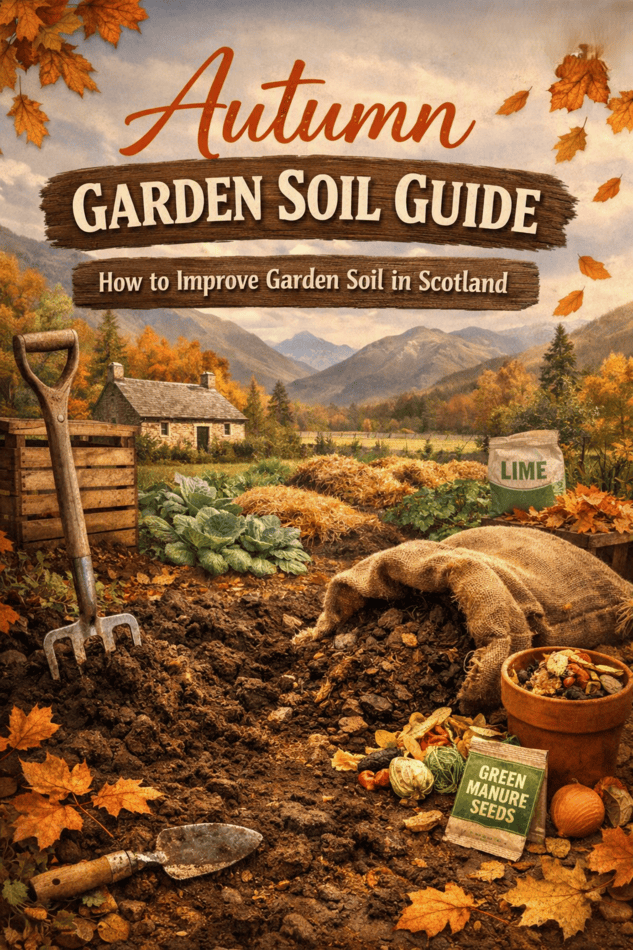
For gardeners in Scotland, however, timing matters. Our wetter autumn and winter conditions mean simply adding large quantities of fertiliser or fresh organic material isn't necessarily beneficial. The goal is to protect the soil, improve its structure and prepare it for healthy growth next spring.
Depending on your garden, that might mean applying well-rotted manure, adding compost, mulching with organic material or improving areas that need additional topsoil.
This guide explains what to add to garden soil in autumn, what to avoid and how to prepare beds, borders and vegetable plots for the colder months.
Quick Answer: What Should You Add to Garden Soil in Autumn?
For most established gardens, well-rotted organic matter is the most useful autumn soil improvement.
The right material depends on what you're trying to achieve:
| Garden problem | What to consider |
|---|---|
| Tired or depleted soil | Organic compost |
| Vegetable beds after harvesting | Well-rotted manure or compost |
| Heavy soil | Organic matter to improve structure |
| Light soil | Compost to improve moisture retention |
| Bare beds over winter | Compost or organic mulch |
| Areas needing more soil depth | Topsoil |
| Exposed soil around established shrubs | Compost or woodchip mulch |
| Preparing hungry crops for next year | Well-rotted manure |
| Potassium deficiency | Potash, where testing or plant needs indicate it |
Before adding anything, look at the condition of your existing soil. Garden soil doesn't automatically need every available amendment every year.
Why Is Autumn a Good Time to Improve Garden Soil?
Once summer crops and annual plants finish, gardeners have much better access to the soil.
Instead of working around actively growing plants, you can:
Remove weeds and spent plants
Assess soil condition
Add organic matter
Mulch bare ground
Prepare vegetable beds
Improve future planting areas
Protect exposed soil over winter
Adding suitable organic matter can improve soil structure, water management and organic-matter levels.
There is one important Scottish consideration, though: rainfall.
Nutrients released too quickly can potentially be washed through soil during prolonged wet weather. That's one reason properly matured organic materials and appropriate timing are preferable to simply applying fresh manure or excessive fertiliser before winter.
Should You Put Manure on Your Garden in Autumn?
Well-rotted manure can be applied to many garden soils in autumn, particularly vegetable beds and areas being prepared for nutrient-demanding crops, but it shouldn't be applied indiscriminately.
The distinction between fresh and well-rotted manure is important.
Well-rotted manure has already undergone substantial decomposition. It is darker, more crumbly and much more suitable as a garden soil improver.
Fresh manure requires more careful handling and timing because it contains more readily available nutrients and incompletely decomposed material.
Where is autumn manure most useful?
Consider well-rotted manure for:
Vegetable plots
Allotments
Empty raised beds
Established borders
Future potato beds
Areas intended for hungry crops
Soil low in organic matter
It can either be incorporated into the upper soil or applied to the surface where appropriate.
Which vegetables benefit from manured soil?
Hungry crops such as courgettes, pumpkins, squashes and many brassicas can benefit from fertile soil containing plenty of organic matter.
However, avoid assuming every vegetable wants freshly enriched ground.
Carrots and parsnips, for example, can develop forked or distorted roots in soil that has been heavily manured immediately before growing.
Planning next year's crop rotation before applying manure is therefore worthwhile.
Should I Add Compost to My Garden Before Winter?
Yes, organic compost can be used in autumn to improve soil and protect bare growing areas.
Compost adds decomposed organic matter that can help improve soil structure and moisture management.
It is particularly useful for:
Established beds
Raised beds
Vegetable plots
Borders
Allotments
Poor garden soil
You don't necessarily have to dig it deeply into the ground.
Depending on your gardening method, compost can be spread across the surface and left for natural soil processes to gradually incorporate it.
This is particularly relevant to gardeners using no-dig methods.
Compost or Manure in Autumn: Which Is Better?
Neither is universally better.
The right choice depends on what you are preparing.
Choose organic compost when:
You want a versatile soil improver for general beds, borders, raised beds and existing garden soil.
Choose well-rotted manure when:
You want to add organic matter and fertility to areas intended for nutrient-demanding crops or improve depleted vegetable-growing ground.
Consider both when:
You're managing a larger vegetable garden or allotment with different crop requirements.
You don't need to apply both materials to every bed simultaneously.
A better approach is to treat each growing area according to what will be planted there next year.
Should You Dig Compost and Manure Into the Soil?
Not necessarily.
There are two main approaches.
Traditional method: incorporate organic matter
Spread suitable organic matter over the ground and lightly incorporate it into the upper soil.
This distributes the material through the growing layer.
No-dig method: leave it on top
Spread mature compost or suitable well-rotted organic material over the soil surface and leave it there.
Worms, microorganisms, weather and natural soil processes gradually integrate organic material with the soil below.
Both approaches can work.
The best method depends on your soil, garden and preferred way of growing.
How Much Compost Should You Add in Autumn?
For an established bed that needs topping up, you don't need to replace the existing soil.
A surface layer of approximately 3–5cm of compost is useful for many garden situations.
That works out at roughly:
30 litres per m² at 3cm depth
40 litres per m² at 4cm depth
50 litres per m² at 5cm depth
So, for a 10m² vegetable bed receiving a 5cm layer:
10 × 50 litres = approximately 500 litres
For larger gardens and allotments, calculating the volume before ordering can prevent both shortages and unnecessary surplus.
What About Heavy Clay Soil?
Heavy soil is familiar to many gardeners across Glasgow and the west of Scotland.
Clay itself isn't necessarily bad soil. It can hold useful nutrients and moisture.
The problems appear when its structure becomes compacted, sticky and poorly aerated.
Adding organic matter can help improve soil structure over time.
Suitable materials include:
Mature organic compost
Well-rotted manure
Other fully decomposed organic matter
Don't expect one application to completely transform heavy soil.
Soil improvement is usually a gradual process. Regular, sensible additions of organic matter are more useful than trying to dramatically alter the soil in one weekend.
How Do You Improve Sandy or Free-Draining Soil?
Very light soils have almost the opposite problem.
They drain quickly and can struggle to retain sufficient moisture and nutrients.
Adding mature organic matter increases the soil's organic content and can improve its ability to retain useful moisture.
For light soils, however, timing requires particular care because nutrients can leach more easily.
Rather than automatically applying nutrient-rich material early in autumn, applications closer to the growing season may sometimes be preferable.
Should Garden Soil Be Left Bare Over Winter?
Generally, there are advantages to protecting bare soil.
Heavy Scottish rain hitting exposed soil throughout autumn and winter can affect its surface structure and contribute to erosion or nutrient movement.
Several approaches can help.
Apply compost as a mulch
A suitable layer of mature compost covers the soil while adding organic matter.
Use organic woodchip
Woodchip can work particularly well around established shrubs, trees and perennial planting.
It helps cover the soil surface and can reduce weed growth and moisture loss.
Avoid mixing large quantities of fresh woodchip deeply into planting soil. It is generally more useful as a surface mulch.
Grow a green manure
Where appropriate, gardeners can establish suitable cover crops rather than leaving vegetable-growing ground completely bare.
The objective is simple:
Protect the soil rather than treating it as an empty surface until spring.
Should I Use Woodchip in Autumn?
Autumn can be a useful time to mulch established areas with organic woodchip.
Woodchip is particularly suitable for:
Shrub borders
Around established trees
Garden paths
Fruit-growing areas
Between raised beds
Perennial planting areas
A mulch layer can help suppress weeds and protect the soil surface.
Keep woodchip slightly away from tree trunks and plant crowns rather than piling it directly against them.
This avoids creating continuously damp conditions immediately around stems and bark.
Do I Need Topsoil in Autumn?
Topsoil serves a different purpose from compost and manure.
Compost and manure improve existing soil. Topsoil adds actual soil volume and structure.
You may need topsoil if you're:
Creating new beds
Levelling a garden
Increasing soil depth
Repairing low areas
Preparing a new lawn
Filling large raised beds
If your existing garden simply needs more organic matter, buying additional topsoil may not solve the problem.
Similarly, if you need to fill a 40cm-deep raised bed, using nothing but compost is usually unnecessary.
For many new beds, combining quality topsoil with mature organic compost creates a more balanced growing medium.
Should You Use Potash in Autumn?
Potash provides potassium, one of the major nutrients plants require.
Potassium plays important roles in plant growth, including processes associated with flowering, fruiting and general plant function.
But fertiliser should be used because plants or soil need it, not simply because autumn has arrived.
If your soil already contains sufficient potassium, adding more provides little benefit and can create nutrient imbalances.
Where nutrient deficiencies are suspected, soil testing provides a much better basis for deciding what to apply.
The same principle applies to other fertilisers:
Test and observe first; feed second.
Should I Test My Soil Before Improving It?
For significant changes, soil testing is extremely useful.
At minimum, consider testing your soil's pH.
Most general garden plants grow well in soil around slightly acidic to neutral conditions, although individual plants have different preferences.
A soil test becomes particularly useful if:
Plants repeatedly perform poorly
You've regularly added fertiliser
You plan to apply lime
You're establishing a large vegetable plot
Certain plants show signs of nutrient problems
You don't know the history of the soil
Adding products without understanding the problem can sometimes make soil conditions worse rather than better.
How Should I Prepare a Vegetable Garden for Winter?
Once the final crops have been harvested, autumn is a good opportunity to prepare next year's growing areas.
A straightforward process is:
Step 1: Remove spent plants
Remove finished annual crops and diseased material.
Healthy plant waste can often be composted where appropriate.
Step 2: Remove problem weeds
Deal with perennial weeds before covering the soil.
Step 3: Decide what you're planting next year
This determines whether a particular bed actually needs manure or another amendment.
Step 4: Add suitable organic matter
Apply compost or well-rotted manure according to the needs of the bed.
Step 5: Protect the surface
Use compost, suitable organic mulch or an appropriate cover crop rather than unnecessarily leaving vulnerable soil exposed.
Step 6: Leave the soil to work
You don't need to continually cultivate the ground throughout winter.
Let soil organisms and natural processes do some of the work for you.
What Should I Do With Raised Beds in Autumn?
Don't forget about raised beds once summer vegetables finish.
Remove spent crops and assess how much the soil level has fallen.
Organic material naturally decomposes and beds often settle over time.
If the existing soil is good but the level has dropped slightly, adding compost may be enough.
If a substantial amount of volume has been lost, you may need a combination of topsoil and compost rather than filling the entire space with compost.
Beds intended for hungry crops next season may also benefit from suitable well-rotted manure.
Common Autumn Soil-Improvement Mistakes
Adding fresh manure directly around plants
For most general garden situations, properly well-rotted material is easier and safer to use.
Assuming more fertiliser is always better
Plants require nutrients in appropriate amounts. Excess isn't automatically beneficial.
Manuring every vegetable bed
Different crops have different requirements. Plan next year's crops first.
Using compost as deep-fill soil
Compost is primarily a soil improver. Use topsoil or an appropriate soil blend where substantial depth or structural fill is required.
Digging wet Scottish soil
Working very wet soil can damage its structure, particularly on heavier ground.
If soil sticks heavily to your boots and tools, conditions may simply be too wet.
Leaving all soil exposed
Mulching or otherwise covering suitable areas can help protect the soil surface over winter.
Autumn Garden Soil FAQs
Is September a good time to improve garden soil?
September can be useful for assessing and preparing beds as summer crops finish, although the best timing depends on the material, soil type and weather. Avoid unnecessary nutrient-rich applications where heavy winter rainfall could simply wash nutrients away.
Can I put well-rotted manure on my garden in autumn?
Yes. Well-rotted manure can be applied to many garden and vegetable-growing soils in autumn. It is particularly useful when preparing suitable beds for nutrient-demanding crops, although sandy soils may benefit from later applications.
Should I put compost on raised beds over winter?
Yes. Mature compost can be applied to established raised beds as a soil improver and surface layer. You don't necessarily need to dig it deeply into the soil.
Should I dig my garden before winter?
Not always. Traditional gardeners may incorporate organic matter, while no-dig gardeners leave mature compost on the surface. Avoid digging or cultivating soil when it is excessively wet.
Can I put manure and compost together?
Yes, where appropriate, but there is no requirement to use both in every bed. Compost is a versatile soil improver, while well-rotted manure can be particularly useful for increasing fertility and organic matter in productive growing areas.
Is manure or compost better for vegetable beds?
It depends on the crop and existing soil. Well-rotted manure can suit hungry crops and depleted vegetable ground, while mature compost provides a versatile way to add organic matter across a wider range of beds.
Should I mulch my garden in autumn?
Autumn and winter mulching can help protect soil, suppress weeds and add organic matter, depending on the mulch used. Compost, well-rotted manure and woodchip all have uses, but they aren't interchangeable.
Can I use woodchip on vegetable beds?
Woodchip is generally more useful as a surface mulch, on pathways or around established perennial plants than mixed directly into vegetable-growing soil. Mature compost is usually more appropriate for improving the growing layer.
How do I know whether my garden needs topsoil or compost?
If you need more soil depth or volume, consider topsoil. If you already have enough soil but want to improve its organic matter and condition, compost is generally more appropriate.
Prepare Your Garden Soil for the Next Growing Season
Autumn garden preparation isn't about adding as many products as possible.
It's about understanding what your soil needs.
For some gardens, that means a layer of organic compost.
For a productive vegetable plot, it might mean well-rotted manure.
Established shrubs may benefit from an organic mulch, while new beds and landscaping projects may require additional topsoil.
Getting those decisions right now can give you healthier, more workable soil when planting begins again.
Kelvin Compost supplies garden and landscaping materials including:
Organic Compost
Well-Rotted Manure
Topsoil
Loam Soil
Organic Woodchips
Potash-Potassium
We supply gardeners, allotments and larger growing projects across Glasgow, South Lanarkshire and surrounding areas of Scotland.
Need help choosing the right material for your garden?
Call +44 7561 251350
Email info@kelvincompost.co.uk
Tell us what you're growing and the size of the area you're working with, and we'll help you work out what you need.
Need Garden Supplies Delivered in Glasgow?
Organic compost, topsoil, manure and more across Scotland