


How to Get Rid of Moss in a Lawn in Scotland
Looking for compost, topsoil or garden supplies?
Browse our full product range or get in touch for delivery across Glasgow and Scotland.
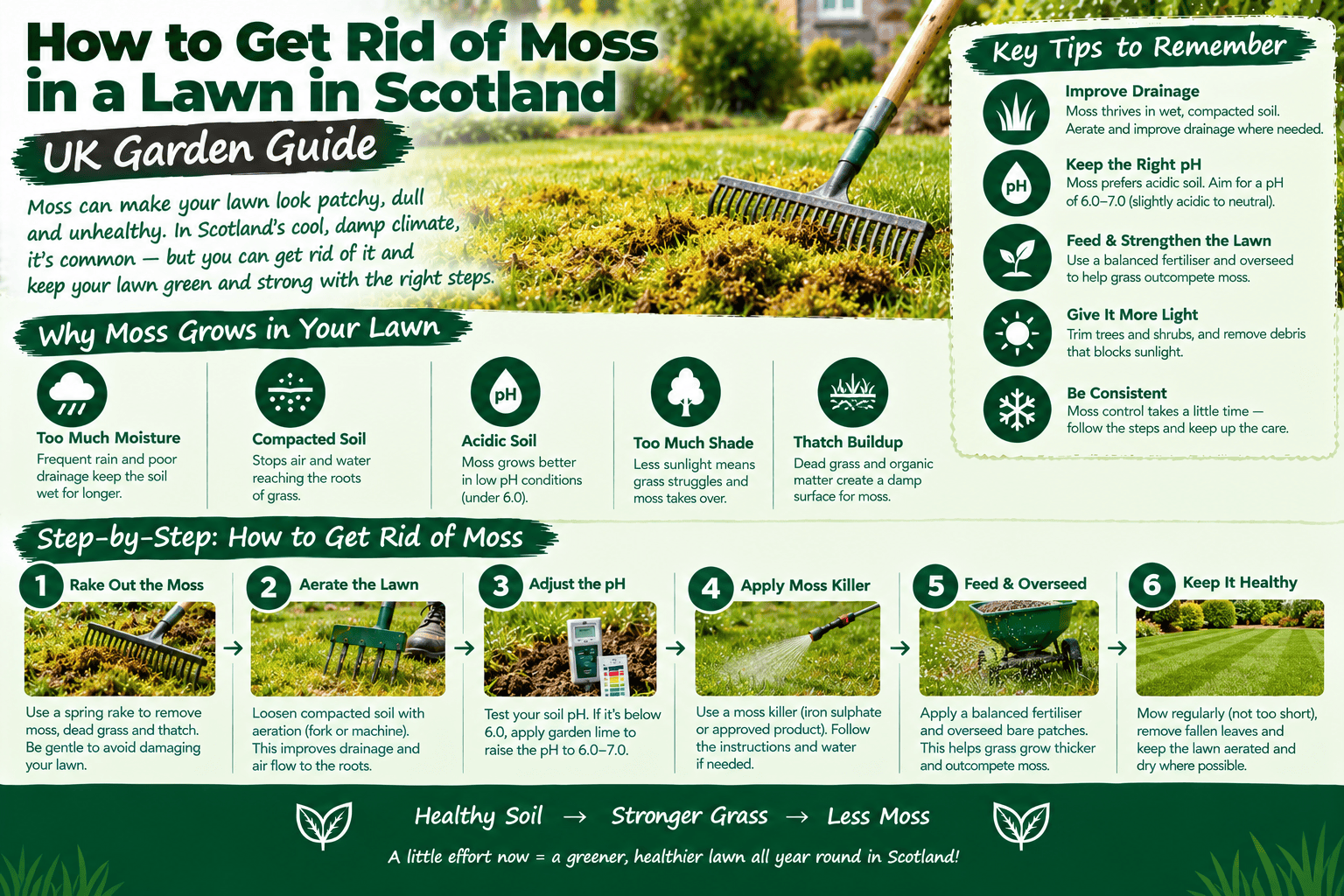
How to Get Rid of Moss in Your Lawn in Scotland (And Stop It Coming Back)
If your lawn looks more like a green carpet of moss than grass, you're not alone.
Moss is a familiar sight in Scottish gardens, especially where lawns spend long periods in shade, the ground stays damp or the grass struggles to grow strongly.
You might have tried raking the moss out. Perhaps you used a moss treatment and saw an improvement for a few weeks, only for the moss to return.
That's frustrating, particularly when you want a healthy lawn without constantly repeating the same job.
The best way to get rid of lawn moss is to improve the conditions that allow it to thrive. Removing existing moss can help, but unless you address shade, drainage, compaction and weak grass growth, the problem is likely to return.
Here's how to tackle moss in a Scottish lawn, what to do in autumn and spring, and when topsoil or compost might help.
Why Is There So Much Moss in My Lawn?
Moss usually becomes established where grass is struggling to compete.
It doesn't necessarily mean your soil is poor or that you need to apply lime.
Common contributing factors include:
Prolonged shade.
Persistently damp ground.
Compacted soil.
Poor drainage.
Thin or weak grass.
Inappropriate mowing.
Low nutrient availability.
Unsuitable grass species for the location.
Several of these problems can occur together.
For example, a shaded lawn with compacted soil may stay wet for longer after rainfall. The grass becomes thin, leaving space for moss to establish.
Removing the moss without improving those conditions rarely provides a lasting solution.
Why Are Scottish Lawns Particularly Prone to Moss?
Scotland's climate can create favourable conditions for moss, particularly in shaded or poorly drained gardens.
Glasgow and western Scotland often experience extended periods of wet weather.
During autumn and winter, lower light levels and slower grass growth can make existing lawn problems more noticeable.
However, rainfall alone doesn't explain every mossy lawn.
A well-maintained lawn with suitable soil and healthy grass can tolerate wet periods better than one suffering from compaction or severe shade.
The key is to identify what's happening in your own garden.
How to Get Rid of Moss in a Lawn: Step by Step
Step 1: Find out why the moss is growing
Before reaching for a rake or treatment, inspect the lawn.
Does water remain on the surface after rainfall?
Is the moss concentrated beneath trees or beside fences?
Does the ground feel unusually hard underfoot?
Is the grass cut extremely short?
The pattern often provides useful clues.
Moss concentrated in shade may need a different solution from moss growing across a compacted, heavily used lawn.
Step 2: Choose the right time
For many established UK lawns, spring and early autumn are suitable periods for renovation, when grass can recover and grow.
Avoid aggressive lawn work when the ground is frozen, waterlogged or excessively dry.
In Glasgow, actual weather and soil conditions matter more than following a fixed date.
Step 3: Remove unwanted moss
Scarifying or vigorous raking can remove moss and accumulated thatch from suitable established lawns.
However, heavy scarification can leave substantial bare areas.
If the lawn is already weak, plan how you will repair it afterward.
Don't scarify saturated soil.
Step 4: Address compaction
Compacted soil limits air and water movement and can restrict root development.
Where compaction is contributing to the problem, appropriate lawn aeration may help.
The method depends on soil conditions and the severity of compaction.
Hollow-tine aeration removes small plugs of soil and may be useful for more serious compaction.
Avoid working the ground when it's too wet.
Step 5: Improve drainage where necessary
If water regularly collects on the lawn, investigate the cause.
Possible problems include compacted ground, an impermeable layer beneath the lawn, poor grading or water entering from surrounding areas.
Adding a thin layer of topsoil won't fix a serious drainage defect.
Some gardens may require more substantial drainage or landscaping work.
Step 6: Overseed bare patches
Once the underlying conditions have been addressed, suitable grass seed can help re-establish coverage.
Choose a seed mix appropriate for the lawn's light conditions and intended use.
For example, a shaded garden may benefit from a shade-tolerant grass mix, although even shade-tolerant grasses need adequate light.
Prepare the surface, sow according to the seed supplier's instructions and keep the area appropriately moist during establishment.
Step 7: Maintain healthier grass
A healthy lawn is better able to compete with moss.
That means:
Mowing at a suitable height.
Avoiding unnecessary traffic on wet soil.
Watering appropriately.
Feeding according to lawn requirements.
Repairing thin areas.
Managing excessive shade where practical.
There is no single product that replaces good lawn management.
Does Scarifying Remove Moss Permanently?
No.
Scarifying physically removes moss and thatch, but it doesn't automatically change the conditions that caused the moss to grow.
If the lawn remains shaded, wet or compacted, moss may return.
Think of scarifying as one part of lawn renovation rather than a complete cure.
Can You Kill Lawn Moss Without Raking?
There are lawn moss-control products available in the UK, including certain iron-based treatments.
Only use products authorised for the intended purpose and follow their current label instructions.
Some products can stain hard surfaces or damage grass if misused.
Treatment may kill existing moss, but dead material may still need removing before successful lawn repair.
Chemical control alone won't resolve poor drainage or shade.
Is Moss a Sign of Acidic Soil?
Not necessarily.
Moss can grow in soils with different pH levels.
Although acidic soil may contribute to poor grass growth in some situations, the presence of moss doesn't prove that the lawn needs lime.
Don't apply lime simply because you have moss.
Test the soil first if you suspect a pH problem.
Unnecessary liming can make soil conditions less suitable for the grass or other plants.
How to Fix Moss Caused by Poor Drainage
Start by determining why the ground stays wet.
If the lawn is compacted, appropriate aeration and reduced traffic may help.
If surface water flows into the lawn from surrounding paving or higher ground, the solution may involve changing drainage arrangements.
If the soil has a severe underlying drainage problem, specialist work may be necessary.
Organic matter can improve some soil properties over time, but it should not be presented as an instant solution to waterlogging.
How to Get Rid of Moss in a Shaded Lawn
Shade is one of the more difficult causes to address.
Where practical, carefully managing overhanging vegetation may improve light levels.
You can also consider shade-tolerant grass species.
However, in very deep shade, maintaining dense grass may be unrealistic.
A different garden surface or shade-tolerant planting scheme may be more successful than repeatedly reseeding the same area.
Can Topsoil Help Repair a Mossy Lawn?
Suitable topsoil can be useful when repairing bare areas, correcting minor surface irregularities or establishing new grass.
But topsoil isn't a moss killer.
If the lawn is compacted or poorly drained, simply spreading additional soil over the surface may conceal the problem rather than solve it.
For repairs, choose suitable material and avoid burying healthy existing grass under a thick layer.
Kelvin Compost supplies topsoil for suitable garden and landscaping projects.
Can Organic Compost Help a Mossy Lawn?
Mature organic compost may be useful as part of a carefully planned soil-improvement programme.
However, bulk soil-improving compost isn't automatically suitable for lawn topdressing.
Lawn topdressing requires a material with an appropriate texture and composition.
Applying excessive organic material can smother existing grass or create an uneven surface.
If you're renovating an entire lawn, assess the soil before deciding whether compost, topsoil or a specified topdressing mix is needed.
You can explore Kelvin's organic compost for suitable soil-improvement applications.
When Is the Best Time to Remove Moss in Scotland?
Spring: March to May
Spring can be suitable for moss removal and lawn repair once grass is actively growing and the soil is workable.
Avoid renovating during persistent cold, waterlogged conditions.
Summer: June to August
Summer is generally better for maintaining established grass than carrying out aggressive scarification during hot, dry spells.
If the lawn is stressed by drought, delay major renovation.
Autumn: September to October
Early autumn is often a useful time for lawn renovation because soil temperatures can remain suitable for grass establishment.
However, heavy rainfall and falling temperatures may limit the available window.
Winter: November to February
Avoid aggressive scarification or major renovation on saturated or frozen lawns.
Instead, observe drainage, reduce unnecessary traffic and plan work for suitable growing conditions.
How to Stop Moss Coming Back
The most effective long-term approach is to make the lawn more suitable for grass.
Maintain an appropriate mowing height and avoid cutting too short.
Reduce unnecessary wear, especially when the soil is wet.
Address compaction and drainage problems where possible.
Repair thin patches with appropriate seed.
Check soil fertility rather than applying fertiliser blindly.
And recognise that very shaded locations may never support a dense traditional lawn.
How Much Topsoil Do You Need for Lawn Repairs?
For a thin, appropriate layer over a prepared bare area, calculate the volume using:
Area in square metres × depth in metres = cubic metres
For example, a 10m² bare area requiring a 2cm layer would need:
10 × 0.02 = 0.2m³, or 200 litres.
| Bare area | 2cm depth | 3cm depth |
|---|---|---|
| 5m² | 100L | 150L |
| 10m² | 200L | 300L |
| 20m² | 400L | 600L |
| 30m² | 600L | 900L |
These are volume calculations, not recommended topdressing depths for established grass.
Choose the application according to the repair work and avoid burying healthy turf.
Common Mistakes When Treating Lawn Moss
Removing moss without fixing the cause
Moss often returns when shade, moisture or compaction remain unchanged.
Scarifying waterlogged ground
This can damage the soil and grass.
Applying lime without testing
Moss doesn't automatically indicate acidic soil.
Adding topsoil to fix drainage
Severe drainage problems require proper diagnosis.
Cutting grass too short
Repeated close mowing can weaken grass and leave space for moss.
Overseeding unsuitable conditions
Grass seed won't establish well in deep shade or persistently saturated soil.
Using too much compost
Bulk compost isn't a universal lawn topdressing material.
Expecting immediate results
A severely mossy lawn may require gradual improvement or a complete renovation.
Frequently Asked Questions
What kills moss in lawns permanently?
There is no guaranteed permanent moss treatment. Long-term control depends on improving the conditions for healthy grass growth.
Why does moss keep coming back?
Usually because the underlying conditions—such as shade, dampness, compaction or weak grass—haven't changed.
When should I remove moss from my lawn in Scotland?
Spring or early autumn can be suitable when grass is actively growing and the soil is workable.
Can I scarify my lawn in October?
Sometimes, but the lawn needs sufficient growing conditions to recover. Late-season work may be unsuitable during cold or very wet weather.
Does lime kill lawn moss?
Lime isn't a general moss treatment. Only apply it where soil testing shows that correcting pH is appropriate.
Will grass grow back after moss removal?
Grass may recover where healthy plants remain, but substantial bare areas often require overseeding or renovation.
Does moss mean my lawn has poor drainage?
Not always. Shade, weak grass growth and other factors can also contribute.
Can I put topsoil over moss?
Adding topsoil over moss doesn't address its cause and may create further lawn problems.
Is compost good for mossy lawns?
Suitable compost may help with some soil-improvement needs, but it isn't a direct moss treatment and shouldn't be applied indiscriminately.
Can I remove moss in winter?
Major renovation is generally better postponed until suitable growing conditions return.
Should I use grass seed after scarifying?
Often, yes, if scarifying leaves bare patches and the underlying growing conditions are suitable.
Is moss bad for the garden?
Moss isn't inherently harmful. It becomes a problem mainly when you want a conventional grass lawn and moss is replacing the grass.
Final Thoughts: Fix the Conditions, Not Just the Moss
A mossy lawn can be frustrating, particularly in a wet or shaded Scottish garden.
But repeatedly removing moss without understanding why it grows is unlikely to provide a lasting improvement.
Start with the conditions.
Check shade, drainage, compaction and grass health.
Then choose the right renovation work for the lawn.
Some gardens need aeration and overseeding. Others need drainage improvements. Very shaded areas may benefit from a different landscaping approach.
The goal isn't simply to remove moss. It's to create conditions where healthy grass can thrive.
Repairing a Lawn in Glasgow?
Kelvin Compost supplies topsoil and other garden materials for suitable lawn repairs, soil improvement and landscaping projects across Glasgow, East Kilbride, South Lanarkshire and surrounding areas.
Explore our topsoil and organic compost, or contact us to discuss your project.
Phone: +44 7561 251350
Email: info@kelvincompost.co.uk
Need Garden Supplies Delivered in Glasgow?
Organic compost, topsoil, manure and more across Scotland