




Compost vs Manure vs Topsoil: What's the Difference, and Which Do You Actually Need?
Looking for compost, topsoil or garden supplies?
Browse our full product range or get in touch for delivery across Glasgow and Scotland.
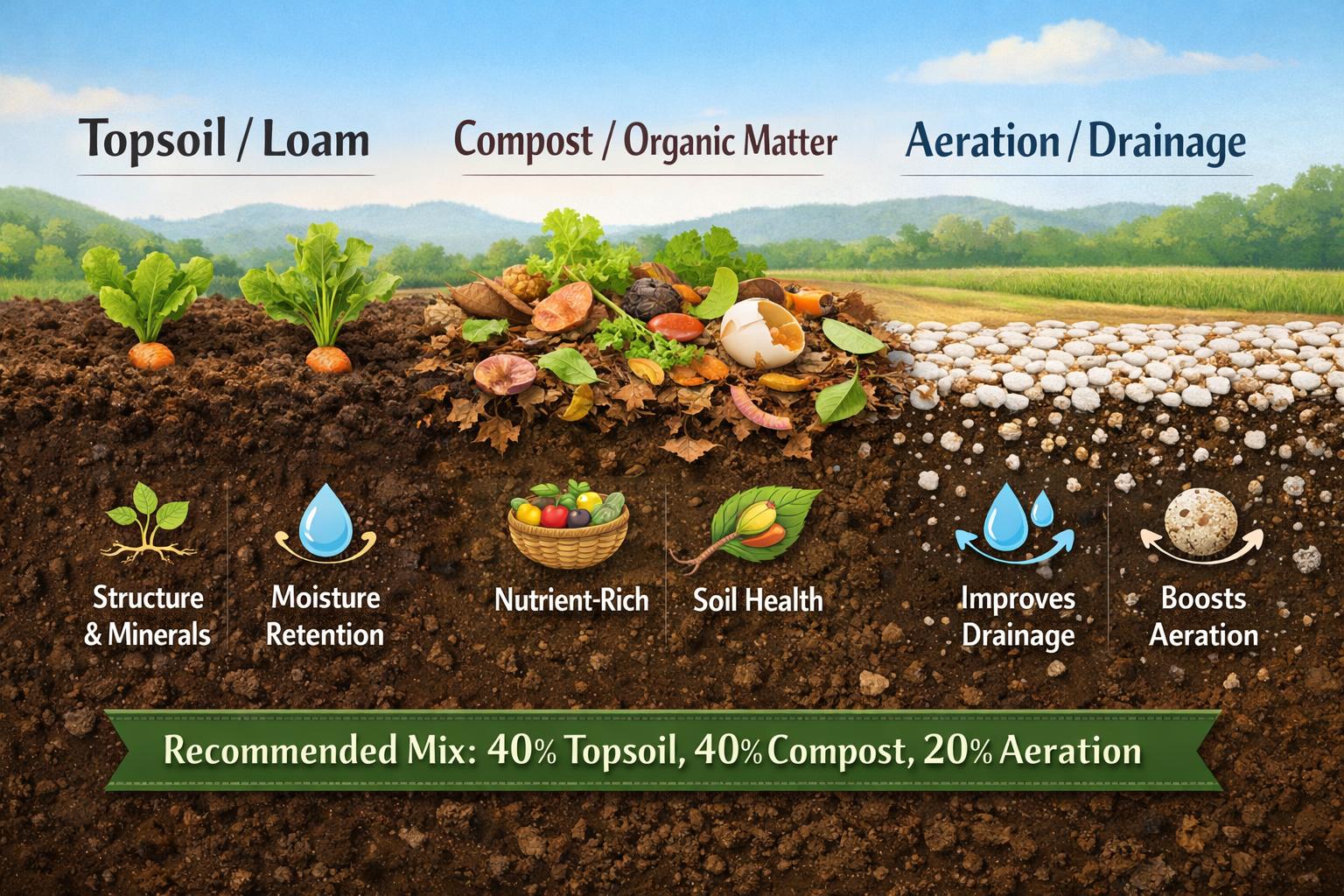
Compost improves soil structure and adds slow-release nutrients, so use it for mulching, general soil improvement and topping up beds close to planting time. Manure is higher in nitrogen and best for hungry crops like brassicas, squash and sweetcorn — dig it in during autumn or winter so it has time to break down before spring. Topsoil is the bulk structural fill for new beds, borders and lawns, and works best blended with compost rather than used alone. Most raised beds and allotment plots need at least two of the three, not just one.
If you've searched "compost vs manure" or "do I need topsoil and compost," you've probably found a lot of conflicting advice. That's because the honest answer is: it depends what you're doing with it, and for most Glasgow gardens the real answer is "some combination of these three," not a single product. This guide breaks down what each material actually does, when to use it, and how to combine them so you're not over-ordering — or under-preparing — your beds this season.
What's the actual difference between compost, manure and topsoil?
The three materials do different jobs, and confusing them is the most common mistake we see from first-time raised bed and allotment growers.
| Material | What it does | Nutrient level | Best used |
|---|---|---|---|
| Compost | Improves structure, boosts moisture retention, feeds soil biology | Moderate, slow-release | Mulching, soil improvement, close to planting |
| Manure | Adds nitrogen and organic matter | High, fast-release once rotted | Autumn/winter dig-in, ahead of hungry crops |
| Topsoil | Provides bulk, structural base and body | Low | Filling beds, borders, levelling lawns |
Think of it this way: topsoil is the "skeleton" of a bed — it gives volume and structure. Compost is the "food and moisture management" layer. Manure is a nutrient boost for crops that need heavy feeding. None of them fully replaces the others.
When should I use compost instead of manure?
Use compost when you need to improve soil condition without a strong nitrogen hit — for mulching, topping up beds, or feeding soil close to planting time. Because compost is fully broken down, it's safe to use right up against seedlings and young plants, unlike fresh manure, which can scorch roots and encourage leafy growth at the expense of fruit and flowers.
Compost is the better choice for:
- Mulching around established plants and shrubs
- Topping up raised beds between growing seasons
- Improving moisture retention in free-draining or sandy soil
- Any planting happening within a few weeks
When should I use manure instead of compost?
Use manure when you're feeding nutrient-hungry crops and have time before planting for it to break down. Brassicas, squash, courgettes and sweetcorn all respond well to a well-rotted manure dig-in the previous autumn or winter. The key word is well-rotted — fresh manure is too strong and can damage roots or introduce weed seed.
Manure works best for:
- Autumn or winter digging-in, well ahead of spring planting
- Heavy feeders: brassicas, squash, courgettes, sweetcorn
- Plots that have grown the same crop for several seasons and need a nutrient reset
Avoid manure for root vegetables like carrots and parsnips — the extra nitrogen tends to produce forked, misshapen roots rather than better yields.
When do I need topsoil rather than compost or manure?
You need topsoil when you're building volume from scratch — filling a new raised bed, levelling a lawn, or creating a border where there wasn't one before. Topsoil alone is a poor growing medium long-term because it's relatively low in organic matter and nutrients, so it's almost always blended with compost rather than used on its own for planting.
Topsoil is the right call for:
- Filling the bulk of a new raised bed (blended with compost)
- Levelling low patches in an existing lawn before turfing or seeding
- Building up a new border or bed from bare ground
- Providing the base layer under a compost/manure top dressing
Do I need to mix them? What ratio works best?
For most raised beds, a 50/50 blend of topsoil and compost for the bulk fill, topped with a 5–7cm layer of pure compost or well-rotted manure at planting level, gives the best results. This gives you the structural body of topsoil, the moisture and biology of compost, and — if manure is added — an extra nutrient boost exactly where roots will access it.
| Project | Recommended mix | Approx. depth |
|---|---|---|
| New raised bed | 50/50 Topsoil + Compost, manure top layer optional | 15–25cm total |
| Allotment plot, annual dig-in | Manure (autumn) or Compost (spring), not both together | 5–8cm |
| Border or shrub bed | Compost mulch over existing soil | 5–7cm |
| New lawn base | Topsoil only, compost worked in before turfing | 10cm |
| Established bed top-up | Compost, occasional manure for heavy feeders | 3–5cm |
A common mistake is layering fresh manure directly under seedlings in spring — because it hasn't had time to rot down, it can burn young roots. If you're planting within a few weeks, compost is the safer choice.
Is Kelvin compost peat-free and PAS 100 certified?
Yes. All our compost is produced to the BSI PAS 100 standard — the UK's recognised specification for composted materials — and matured on farmland at our site in Chapelton, South Lanarkshire, using organic materials with no synthetic chemicals or peat. Our manure is well-rotted before dispatch, and our topsoil is screened to remove stones and debris, so all three products arrive ready to use rather than needing to sit and settle first.
Ordering compost, manure or topsoil delivery in Glasgow
Once you know which combination your project needs:
- Work out your volume using our raised bed compost calculator guide or by measuring length × width × depth
- Choose Organic Compost, Manure, Top Soil, or a ready-blended Topsoil Compost Mix depending on what you're planting
- Order online through our product pages, or call +44 7561 251350 for HIAB and multi-tonne loads
We deliver across Glasgow, East Kilbride and South Lanarkshire (£15 local delivery in East Kilbride and surrounding areas), with quotes available for the wider Central Belt.
Frequently Asked Questions
Can I mix compost and manure together?
Yes, but only if the manure is well-rotted — fresh manure mixed with compost can still be too strong for young plants. A well-rotted manure and compost blend works well as an autumn dig-in.
Is topsoil the same as compost?
No. Topsoil is a low-nutrient bulk fill material used for structure and volume, while compost is nutrient-rich organic matter used to feed and improve soil. Most beds need both, not one instead of the other.
Which is cheaper, compost or manure?
Prices vary, but manure is often slightly cheaper per litre than composted products because it requires less processing — though it needs more lead time before it can be used safely near plants.
Do I need topsoil for a raised bed, or just compost?
For a new raised bed, a 50/50 blend of topsoil and compost is more cost-effective and better for long-term structure than filling the whole bed with pure compost, which is expensive and can hold too much moisture on its own.
How long does manure need to rot before use?
Well-rotted manure typically takes 6–12 months from fresh. If in doubt, buy pre-rotted manure rather than fresh, especially for use close to planting time.
Need Garden Supplies Delivered in Glasgow?
Organic compost, topsoil, manure and more across Scotland