



Compost as Mulch: Benefits, Uses & How to Apply It
Looking for compost, topsoil or garden supplies?
Browse our full product range or get in touch for delivery across Glasgow and Scotland.
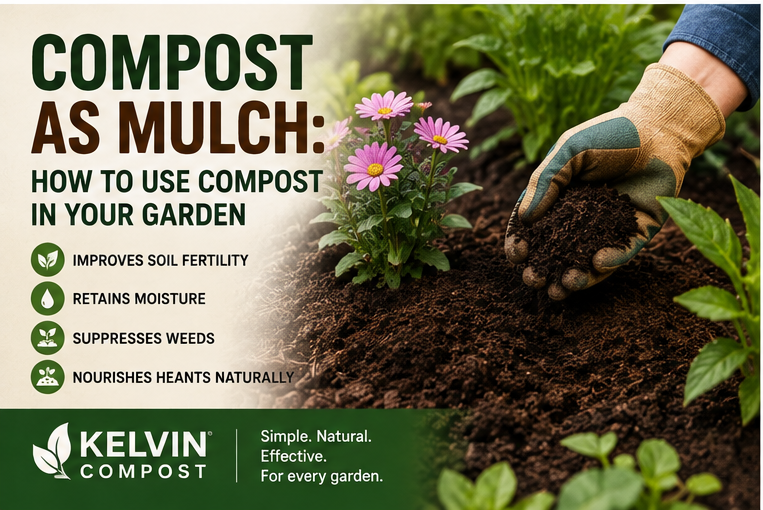
Yes. Mature compost can be used as a mulch on the surface of garden soil.
Compost mulch can help add organic matter, reduce moisture loss, suppress some weeds and gradually improve the soil beneath it.
It is particularly useful around vegetable beds, flower borders, shrubs and established planting areas.
However, compost mulch is not the same as using compost as a replacement for topsoil. The way you apply it matters.
This guide explains what compost mulch is, how thick to apply it, when to use it and which plants can benefit from it.
What Is Compost Mulch?
Compost mulch is a layer of mature compost spread over the surface of soil.
Unlike compost that is dug into the soil as a soil improver, mulch remains primarily on the surface.
The RHS identifies well-rotted garden compost and manure among materials that can be used as mulch and explains that organic mulches can help with moisture retention, weed suppression, frost protection and adding organic matter.
As the compost gradually breaks down and is incorporated into the soil naturally, it contributes organic matter and supports soil health.
What Are the Benefits of Compost as Mulch?
Using compost as mulch has several potential benefits.
1. It Helps Reduce Moisture Loss
A surface layer of organic material can reduce evaporation from exposed soil.
This is particularly useful during dry periods when bare soil can lose moisture quickly.
2. It Adds Organic Matter
As compost breaks down, organic material is incorporated into the upper soil layer.
This can contribute to longer-term soil improvement.
3. It Can Suppress Weeds
A suitable layer of mulch can make it harder for weed seeds to germinate and establish.
It will not eliminate every weed, especially established perennial weeds, but it can reduce new weed growth.
4. It Protects the Soil Surface
Bare soil is exposed to rainfall, wind and temperature fluctuations.
A mulch layer provides a protective surface between the soil and the elements.
5. It Can Support Soil Life
Organic matter provides resources for the organisms living in healthy soil.
Earthworms and microorganisms gradually incorporate and break down organic material.
6. It Can Improve the Appearance of Garden Beds
Freshly applied compost gives borders and planting areas a tidy, dark surface while providing a practical soil-management benefit.
Is Compost Better Than Bark or Woodchip as Mulch?
Not necessarily.
Different mulch materials have different purposes.
| Mulch | Main advantages | Typical uses |
|---|---|---|
| Compost | Adds organic matter and can improve soil | Vegetable beds, borders, planting areas |
| Woodchip | Long-lasting surface mulch | Paths, shrubs, trees and large borders |
| Bark | Decorative and relatively long-lasting | Ornamental borders |
| Leafmould | Organic matter and moisture retention | Woodland-style planting and soil improvement |
| Well-rotted manure | Organic matter and nutrients | Beds and hungry planting areas |
Compost is particularly useful where soil improvement is one of the main objectives.
Woodchip and bark can be better choices where you want a longer-lasting decorative surface mulch.
How Thick Should Compost Mulch Be?
A common approach is to apply a layer several centimetres thick across the soil surface.
The RHS describes mulch as a layer of at least around 5cm and recommends using suitable organic materials according to the application.
For many garden beds, around 5cm of mature compost provides a useful starting point.
Avoid piling compost directly against plant stems, trunks or crowns.
The aim is to cover the soil, not bury the plant.
How to Apply Compost as Mulch
Applying compost mulch is straightforward.
Step 1: Remove large weeds
Clear established weeds before applying the mulch.
Compost mulch is much more effective when perennial weeds have already been dealt with.
Step 2: Prepare the soil surface
Remove large debris and lightly loosen the surface if necessary.
Avoid unnecessarily disturbing established plant roots.
Step 3: Spread the compost
Apply a reasonably even layer across the soil.
Aim for consistent coverage rather than creating large piles.
Step 4: Keep compost away from stems and trunks
Leave a small gap around plant stems and tree trunks.
Do not create a mound of wet organic material directly against the bark or crown of a plant.
Step 5: Leave the mulch on the surface
Compost used as mulch does not normally need to be dug into the soil.
Rain, worms and natural soil activity will gradually incorporate some of the material.
When Is the Best Time to Use Compost as Mulch?
Compost mulch can be useful at different times of year.
However, late autumn through winter is traditionally an important period for applying organic mulches, particularly around established borders and planting areas. The RHS recommends late autumn to late winter for many mulching applications.
You can also apply compost mulch during spring when preparing beds for planting.
The most important considerations are soil condition and plant requirements.
Avoid spreading thick organic mulch over frozen or waterlogged ground.
Can You Use Compost as Mulch Around Vegetables?
Yes.
Compost mulch can be particularly useful in vegetable gardens and allotments.
It can help:
- Reduce moisture loss
- Suppress some weeds
- Add organic matter
- Protect the soil surface
- Support soil structure
Apply it around established crops while keeping compost away from plant stems where appropriate.
For annual vegetable beds, compost can also be incorporated into the soil during bed preparation.
The two uses are complementary:
Compost incorporated into soil → soil improvement
Compost left on the surface → mulch
Can You Use Compost as Mulch Around Trees?
Yes, mature compost can be used around established trees as part of general soil management.
Spread it over the root zone rather than creating a mound against the trunk.
Tree roots often extend well beyond the area immediately around the trunk, so avoid concentrating all the material into a small circle.
For trees and large shrubs, woodchip or bark can also be useful where a longer-lasting surface mulch is preferred.
Can You Use Compost as Mulch Around Shrubs?
Yes.
Compost mulch can work well around established shrubs and ornamental borders.
It can improve the appearance of the border while gradually adding organic matter.
Apply it around the root zone while leaving space around the base of the plant.
For long-lasting ornamental mulch, bark or woodchip may be preferable in some situations.
Can You Put Compost on Top of Grass?
Compost can be used in lawn renovation and top dressing, but it should be applied carefully.
A thick layer of compost can smother grass.
For lawn applications, use a suitable fine material and apply a thin, even layer that can work down into the grass canopy.
This is different from applying a 5cm mulch layer to a garden border.
If the objective is lawn renovation, aeration, overseeding and appropriate top dressing should generally be considered together.
Can You Use Compost as Mulch in Winter?
Yes.
Winter is one of the useful periods for applying organic mulch to established garden beds.
A mulch layer can protect the soil surface and contribute organic matter as it breaks down.
However, do not use mulch to cover saturated ground or pile it around plant stems.
Compost Mulch vs Compost Dug Into Soil
The biggest difference is where the compost goes.
Compost dug into soil
Used primarily to:
- Improve soil structure
- Add organic matter
- Improve moisture management
- Prepare beds
- Improve depleted soil
Compost used as mulch
Used primarily to:
- Protect the soil surface
- Reduce moisture loss
- Suppress weeds
- Add organic matter gradually
- Protect planting areas
Neither approach is automatically better.
The correct method depends on what you are trying to achieve.
What Type of Compost Is Best for Mulching?
For garden mulching, choose mature, stable compost suitable for horticultural use.
A good compost should have a consistent, crumbly texture without obvious fresh organic waste.
For larger garden projects, certified compost can provide additional confidence about the production standard and consistency of the material.
Kelvin Compost's existing organic compost content discusses BSI PAS 100-certified compost and its use for soil improvement, vegetable beds, raised beds and mulching.
How Much Compost Mulch Do I Need?
Calculate the area first.
Length × width = area in square metres
Then:
Area × mulch depth = volume required
For example, a border measuring 10m × 3m has an area of:
10 × 3 = 30m²
At a 5cm mulch depth:
30 × 0.05 = 1.5m³
That is approximately 1,500 litres of compost.
For larger areas, bulk compost is often more practical than buying individual retail bags.
Common Compost Mulching Mistakes
Applying too much
A very thick layer can create problems rather than benefits.
Use a sensible, even depth.
Covering plant stems
Keep compost away from stems, crowns and tree trunks.
Mulching over perennial weeds
Mulch is not a substitute for removing established weeds.
Using immature compost
Fresh or incompletely composted material is not the same as mature compost.
Applying mulch to waterlogged soil
If the underlying drainage problem has not been addressed, adding organic material to the surface will not necessarily solve it.
Assuming every plant needs the same treatment
Some plants prefer particular soil conditions. Always consider the requirements of the plants you are growing.
Is Compost Mulch Good for Clay Soil?
It can be.
Adding organic matter to clay soil can help improve its structure over time.
However, compost mulch should be considered part of a broader soil-improvement strategy rather than a guaranteed solution to severe drainage problems.
If a garden remains persistently waterlogged, investigate the cause before simply applying more material.
Is Compost Mulch Good for Sandy Soil?
Yes.
Sandy soils can benefit from organic matter because they often drain quickly and may struggle to retain moisture.
Regular additions of mature organic matter can form part of a long-term strategy for improving the soil's ability to support healthy plant growth.
Compost Mulch: Quick Guide
Want to improve existing soil?
Use compost as a soil improver or surface mulch.
Want to suppress weeds?
Apply a suitable mulch layer over prepared soil.
Want to mulch vegetable beds?
Mature compost can be useful around established crops.
Want a long-lasting decorative mulch?
Consider bark or woodchip.
Want to mulch trees?
Compost can be used, but keep it away from trunks and avoid creating a mound.
Want to improve clay soil?
Use organic matter as part of a wider soil-improvement programme.
Frequently Asked Questions
Can compost be used as mulch?
Yes. Mature compost can be spread over the surface of garden soil as an organic mulch.
Is compost better than mulch?
Compost is a type of organic material that can be used as mulch. Whether it is better than bark, woodchip or another mulch depends on the purpose.
How thick should compost mulch be?
Around 5cm is a useful general starting point for many garden beds, although the ideal depth depends on the material and application.
Can I put compost directly on top of soil?
Yes. Mature compost can be placed directly on the soil surface and used as mulch.
Can compost mulch kill weeds?
It can help suppress new weed growth, but it will not reliably eliminate established perennial weeds.
Can I use compost mulch around plants?
Yes, provided the compost is mature and it is kept away from plant stems and crowns.
Can compost mulch be used around trees?
Yes. Spread it over the root zone rather than piling it against the trunk.
Should compost mulch be dug into the soil?
Not necessarily. If you are using compost specifically as mulch, leave it on the surface. Natural soil activity will gradually incorporate some of the material.
Final Thoughts
Compost is one of the most versatile materials available to gardeners because it can be used both in the soil and on the soil.
As a soil improver, it adds organic matter and helps improve growing conditions. As a mulch, it protects the surface, helps retain moisture, suppresses some weeds and gradually contributes organic matter to the soil.
The key is using mature compost at an appropriate depth and matching the application to the plants and soil.
For larger borders, allotments, vegetable gardens and landscaping projects, buying compost in bulk can make applying an effective mulch layer considerably easier.
Looking for bulk compost, topsoil, manure or other garden materials in Glasgow and surrounding areas? Kelvin Compost supplies garden materials for domestic gardeners, allotments and landscaping projects.
Need Garden Supplies Delivered in Glasgow?
Organic compost, topsoil, manure and more across Scotland