




Can You Lay Topsoil in Winter? Best Time in the UK
Looking for compost, topsoil or garden supplies?
Browse our full product range or get in touch for delivery across Glasgow and Scotland.
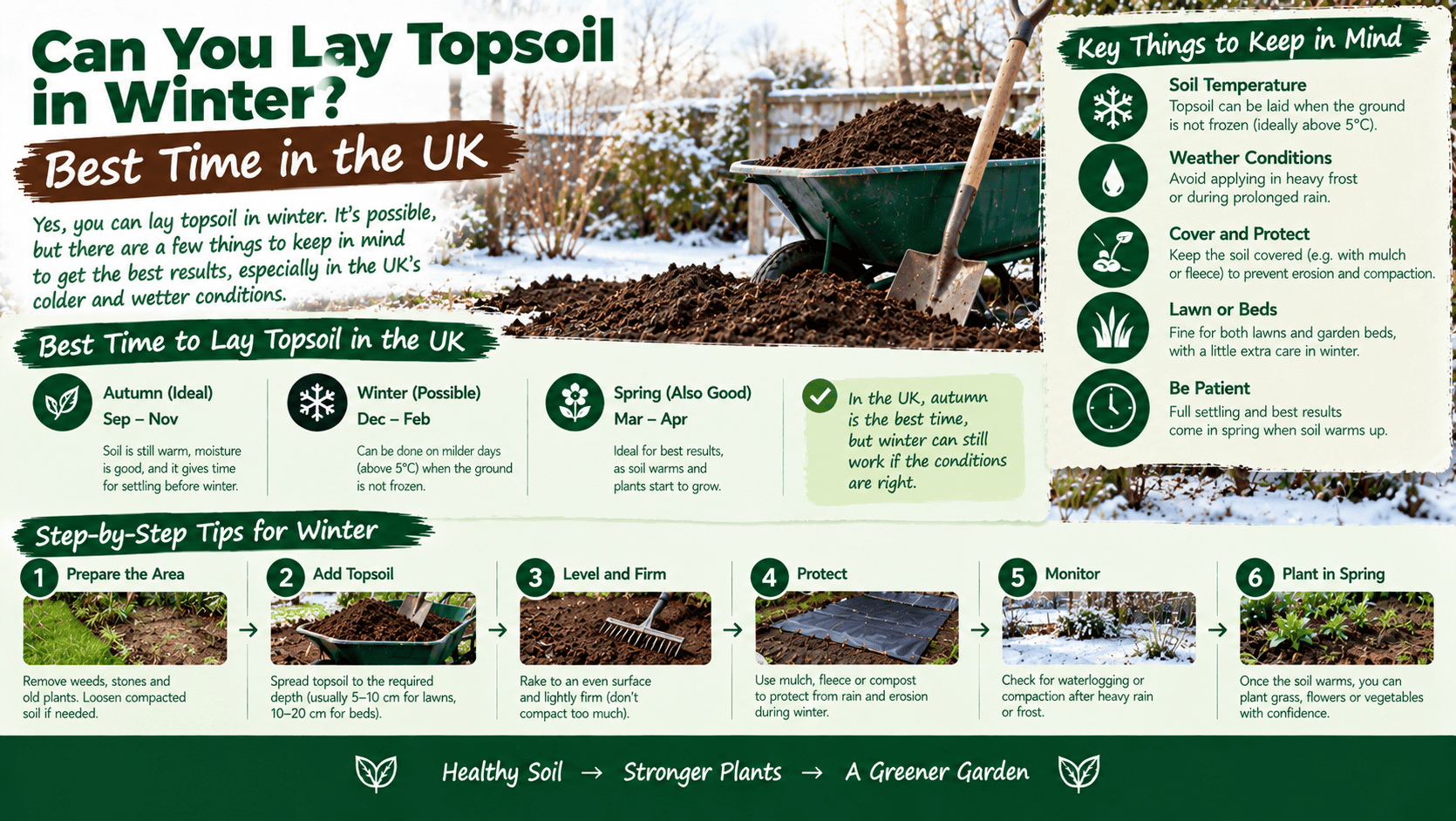
Can You Lay Topsoil in Winter? The Best Time to Spread Topsoil in the UK
You've planned a garden makeover, measured the area and worked out how much topsoil you need. There's just one problem: it's October, the weather is turning colder, and you're wondering whether to get the job done now or wait until spring.
It's a sensible question, especially in Scotland, where a dry morning can quickly turn into a very wet afternoon.
Yes, you can lay topsoil in winter, provided the ground is workable, unfrozen and not waterlogged. The season itself isn't the main problem. What matters is the condition of the soil, how the ground has been prepared and what you plan to do with the area afterwards.
Spreading topsoil onto saturated ground can cause compaction, rutting and drainage problems. But waiting until spring isn't always necessary either.
Here's how to decide when to lay topsoil, which conditions to avoid and how to prepare your garden for a successful result.
When Is the Best Time to Lay Topsoil?
For many UK garden projects, spring and autumn are convenient times to lay topsoil because temperatures are generally moderate and the ground may be easier to work.
However, there is no single month that guarantees good conditions.
| Season | Can you lay topsoil? | Main consideration |
|---|---|---|
| Spring | Yes | Avoid saturated ground after prolonged rain |
| Summer | Yes | Prevent excessive drying and manage watering |
| Autumn | Yes | Often suitable before prolonged winter wet weather |
| Winter | Sometimes | Avoid frozen, waterlogged or very soft ground |
A dry, workable day in November may be better than a wet day in April.
Rather than deciding solely by the calendar, check the ground itself.
Can You Lay Topsoil in October?
Yes. October can be a useful month for garden preparation.
If you're creating a new border, preparing an area for turf or increasing soil depth, there may still be opportunities to complete the work before winter.
However, autumn rainfall can make conditions change quickly.
Before spreading topsoil, check whether the existing ground is firm enough to work without causing damage.
If your boots sink deeply into the soil or machinery leaves substantial ruts, the site may be too wet.
Can You Lay Topsoil in November?
You can lay topsoil in November when conditions are suitable.
The main challenge is finding a workable weather window.
In Glasgow and surrounding areas, prolonged rainfall can leave clay-rich or compacted ground saturated.
If the site is waterlogged, postpone the work.
Don't spread a large quantity of new soil simply because delivery has already been arranged.
A short delay may prevent a much bigger landscaping problem.
Can You Lay Topsoil in December, January or February?
Sometimes.
Topsoil can be spread during winter if:
The ground isn't frozen.
The existing soil isn't waterlogged.
The material itself is workable.
Access is safe.
The soil can be spread without excessive compaction.
The finished surface can be protected until planting.
However, winter conditions can make all of these requirements harder to meet.
For domestic gardens, waiting for a suitable dry period is often more sensible than forcing the work through during prolonged wet or freezing weather.
Can You Put Topsoil on Wet Ground?
It depends on how wet the ground is.
Slightly moist soil can be workable.
Saturated soil is different.
When the spaces between soil particles fill with water, the soil becomes more vulnerable to structural damage under pressure.
Walking repeatedly over saturated ground, moving wheelbarrows or using heavy machinery can compact the soil.
This can reduce the space available for air and water movement.
The result may be a garden that drains poorly even after fresh topsoil has been added.
If the ground is saturated, wait until it becomes workable.
How Do You Know If the Ground Is Too Wet?
Try a simple soil check before starting.
Take a handful of soil from the area you intend to prepare.
Squeeze it gently.
If the material is very sticky, smears easily or releases water, it may be too wet for cultivation.
If it crumbles reasonably easily and can be worked without smearing, conditions may be more suitable.
Also look at the ground underfoot.
Warning signs include:
Standing water.
Deep footprints.
Wheelbarrow ruts.
Sticky clay clinging heavily to tools.
Water collecting in inspection holes.
No single test is perfect, but these signs help you decide whether to proceed.
Can You Lay Topsoil on Frozen Ground?
It's generally better to avoid it.
Frozen ground is difficult to prepare properly.
You may also be unable to assess the soil underneath or create a suitable transition between the existing ground and imported material.
When frozen soil thaws, previously firm-looking surfaces can become very soft.
This may cause settlement, rutting and handling problems.
If frost is forecast, consider postponing major soil preparation until the ground has thawed and conditions are suitable.
Will Frost Damage New Topsoil?
Ordinary frost doesn't automatically make topsoil unusable.
Soil naturally experiences freezing and thawing.
The more important question is whether the soil has been spread and prepared under suitable conditions.
Avoid compacting frozen or thawing ground.
If you've already spread topsoil and frost arrives, don't assume the project has failed.
Wait for the ground to thaw before carrying out further cultivation or final levelling.
Can You Spread Topsoil Before Heavy Rain?
It's usually better to avoid spreading and working large quantities of topsoil immediately before prolonged heavy rainfall, especially on poorly draining ground.
Rain can make the material difficult to handle and may damage a freshly prepared surface.
If the project cannot be completed before wet weather arrives, consider whether the material can be stored appropriately until conditions improve.
A temporary delay is often preferable to repeatedly working saturated soil.
Is Autumn Better Than Spring for Topsoil?
Neither season is automatically better.
Autumn may be convenient when you're preparing ground for a new lawn or carrying out landscaping before winter.
Spring may be more practical if the garden is extremely wet through winter or if planting is planned for later in the year.
The best choice depends on:
Soil type.
Drainage.
Weather.
Project schedule.
Planting requirements.
Site access.
For Scottish gardens with heavy or poorly drained soil, the condition of the ground should take priority over a fixed planting calendar.
Should You Lay Topsoil Before Winter or Wait Until Spring?
Ask yourself three questions.
1. Is the existing ground ready?
If weeds, rubble, compaction or drainage problems still need attention, deal with them before importing soil.
2. Can you spread the material without damaging the site?
If the ground is too soft for wheelbarrows or machinery, waiting may be sensible.
3. What happens after the topsoil is laid?
If you're preparing a new lawn, coordinate topsoil preparation with turfing or seeding.
If you're creating a border that won't be planted until spring, think about how you'll protect the surface over winter.
There's little benefit in creating a beautifully level seedbed in autumn if repeated winter weather will mean preparing it again in spring.
Can You Lay Turf Over New Topsoil in Winter?
Turf can sometimes be laid during the cooler part of the year when ground conditions are suitable.
However, frozen or waterlogged soil is unsuitable for normal turf preparation.
The topsoil should be properly prepared, reasonably firm and level before turf is laid.
If the soil is saturated, avoid forcing the project through.
Turf establishment also depends on the grass, weather and aftercare.
For a detailed comparison of turf and seed, see Kelvin Compost's existing guide to creating a new lawn in Scotland.
Can You Sow Grass Seed in Winter?
Winter is generally less favourable for conventional grass seed establishment because cold soil temperatures slow germination and growth.
For many UK lawns, spring and early autumn are more reliable sowing periods.
If you're preparing a lawn during winter, it may make sense to complete suitable groundwork and leave final seedbed preparation until conditions improve.
Don't assume that laying topsoil and sowing grass seed must happen on the same day.
Can You Add Topsoil to Raised Beds in Winter?
Yes, provided the material and site are workable.
Raised beds can be filled during the cooler months in preparation for spring planting.
However, the correct growing medium matters.
A raised bed may require suitable topsoil combined with mature organic matter, depending on its design and intended crops.
If the bed is already filled and has adequate soil depth, adding more topsoil may not be necessary.
You may instead need to improve the existing soil with compost.
Can You Add Topsoil to Flower Borders in Winter?
You can add suitable topsoil where a border genuinely needs more soil depth.
However, avoid burying the crowns of established plants or raising soil levels against vulnerable stems.
If the border already contains sufficient soil, mature compost may be more useful for improving organic matter.
Winter is also a good time to plan future planting, but avoid digging saturated ground simply to meet a schedule.
What Happens If You Spread Topsoil on Compacted Clay?
This is particularly important for new-build gardens.
Imagine adding 15cm of suitable topsoil over a dense layer of compacted clay.
The new surface may initially look excellent.
But rainwater can move through the imported soil and then encounter the compacted layer underneath.
Water may accumulate, leaving the upper soil wet and difficult to manage.
Adding topsoil doesn't automatically solve compaction or drainage problems.
Investigate the existing ground before spreading new material.
Should You Mix New Topsoil With Existing Soil?
The answer depends on the site.
Where you're adding topsoil over suitable existing ground, preparing the interface can help avoid a sharply compacted boundary.
However, avoid aggressive cultivation when soil is saturated.
For heavily compacted sites, the underlying ground may require appropriate loosening before the final growing layer is established.
The objective is to create a suitable soil profile, not simply cover the original ground.
How Should You Store Topsoil If the Weather Turns Bad?
Sometimes the topsoil arrives and the forecast changes.
If you cannot spread it immediately:
Choose a clean, suitable storage location.
Keep it separate from rubbish and construction debris.
Avoid storing it where runoff will cause problems.
Protect it from excessive rainfall where practical.
Prevent vehicles from repeatedly driving over the pile.
Wait until the site becomes workable.
Bulk bags can help keep material contained, but they aren't automatically weatherproof long-term storage systems.
If you're expecting to store topsoil for several months, discuss suitable storage arrangements with the supplier.
How Much Topsoil Do You Need?
Once the timing is right, calculate the quantity before ordering.
The formula is:
Area (m²) × required depth (m) = volume (m³)
For example, a 30m² garden requiring an additional 10cm of topsoil needs:
30 × 0.10 = 3m³
That's approximately 3,000 litres.
| Area | 5cm depth | 10cm depth | 15cm depth |
|---|---|---|---|
| 10m² | 0.5m³ | 1m³ | 1.5m³ |
| 20m² | 1m³ | 2m³ | 3m³ |
| 30m² | 1.5m³ | 3m³ | 4.5m³ |
| 50m² | 2.5m³ | 5m³ | 7.5m³ |
| 100m² | 5m³ | 10m³ | 15m³ |
These are calculated volumes, not recommendations to apply the same depth to every project.
The required depth depends on the existing soil and intended use.
Topsoil Delivery in Winter: What Should You Check?
Winter deliveries require a little extra planning.
Before placing an order, consider:
Is the driveway or unloading surface firm enough?
Is there sufficient access for the delivery vehicle?
Are there narrow entrances or overhead obstructions?
Will the material be delivered in bulk bags or another format?
Can the topsoil be stored if the weather changes?
Is the garden accessible without damaging lawns or paving?
Are you ready to use the material soon after delivery?
Don't assume a large delivery vehicle can travel across soft garden ground.
Discuss access and unloading arrangements before confirming the order.
Common Mistakes When Laying Topsoil in Winter
Working waterlogged soil
This can damage soil structure and make the finished ground harder to manage.
Spreading topsoil over frozen ground
Proper preparation becomes difficult, and thawing conditions may create problems.
Ignoring compaction underneath
Fresh topsoil doesn't automatically correct poor ground preparation.
Ordering before checking the forecast
A short delay may prevent difficult handling and storage.
Leaving delivered soil contaminated
Store it somewhere clean and suitable.
Preparing a lawn seedbed too early
Winter weather may mean the surface needs further preparation before sowing.
Using topsoil when compost is actually needed
Topsoil provides soil volume. Compost primarily improves suitable existing soil.
Forgetting access requirements
Winter ground conditions can make deliveries more difficult.
Frequently Asked Questions
Can you lay topsoil in winter?
Yes, when the ground is unfrozen, not waterlogged and suitable for preparation.
What is the best month to lay topsoil?
There is no single best month. Spring and autumn are often convenient, but soil conditions matter more than the calendar.
Can you lay topsoil in October?
Yes. October can be suitable for garden preparation if the ground remains workable.
Can you lay topsoil in November?
Yes, provided the soil is not saturated or frozen.
Can you lay topsoil in December?
Sometimes. Avoid waterlogged and frozen conditions.
Can you put topsoil on wet ground?
Slightly moist ground may be workable, but avoid spreading and cultivating soil when it is saturated.
Can you spread topsoil before rain?
Light rain isn't necessarily a problem, but prolonged heavy rainfall can make spreading and preparation difficult.
Will frost ruin new topsoil?
Not automatically. Frost is a normal part of seasonal soil conditions, but avoid working frozen or thawing ground.
Is autumn or spring better for laying topsoil?
Both can be suitable. Choose according to weather, soil conditions and the project.
Can you lay turf in winter?
Turf can sometimes be laid in cooler weather when the ground is suitable, but avoid frozen or waterlogged conditions.
Can you fill raised beds with topsoil in winter?
Yes, provided the material is suitable and workable. Use an appropriate growing medium for the intended crops.
Can you store topsoil outside over winter?
Yes, with suitable protection against contamination, excessive water and unnecessary compaction.
Can topsoil fix winter waterlogging?
Not by itself. Persistent waterlogging may require investigation of drainage, compaction and ground levels.
Should I buy topsoil now or wait until spring?
Buy when the ground is ready and you have suitable access and storage arrangements. There's no need to force the job through unsuitable winter conditions.
Final Thoughts: Let the Ground Conditions Decide
You don't need to stop every landscaping project when winter approaches.
But you also shouldn't rush to spread topsoil simply because you've booked a delivery or have a free weekend.
The best results come from working with the ground rather than against it.
If the soil is workable, the site has been properly prepared and the weather is suitable, autumn or winter topsoil work may be perfectly practical.
If the ground is saturated, frozen or badly compacted, waiting is often the better decision.
Good preparation matters more than getting the job finished in a particular month.
Planning a Garden Project in Glasgow?
Kelvin Compost supplies topsoil, organic compost and other garden materials for projects across Glasgow, East Kilbride, South Lanarkshire and surrounding areas.
Whether you're preparing a new lawn, creating borders or planning a raised bed, calculate the material you need and confirm delivery arrangements before ordering.
Browse topsoil: https://www.kelvincompost.co.uk/product/top-soil
Browse organic compost: https://www.kelvincompost.co.uk/product/organic-compost
Call: +44 7561 251350
Email: info@kelvincompost.co.uk
Need Garden Supplies Delivered in Glasgow?
Organic compost, topsoil, manure and more across Scotland