




Best Compost and Soil for Lawns: Feeding and Repairing Grass in Glasgow
Looking for compost, topsoil or garden supplies?
Browse our full product range or get in touch for delivery across Glasgow and Scotland.
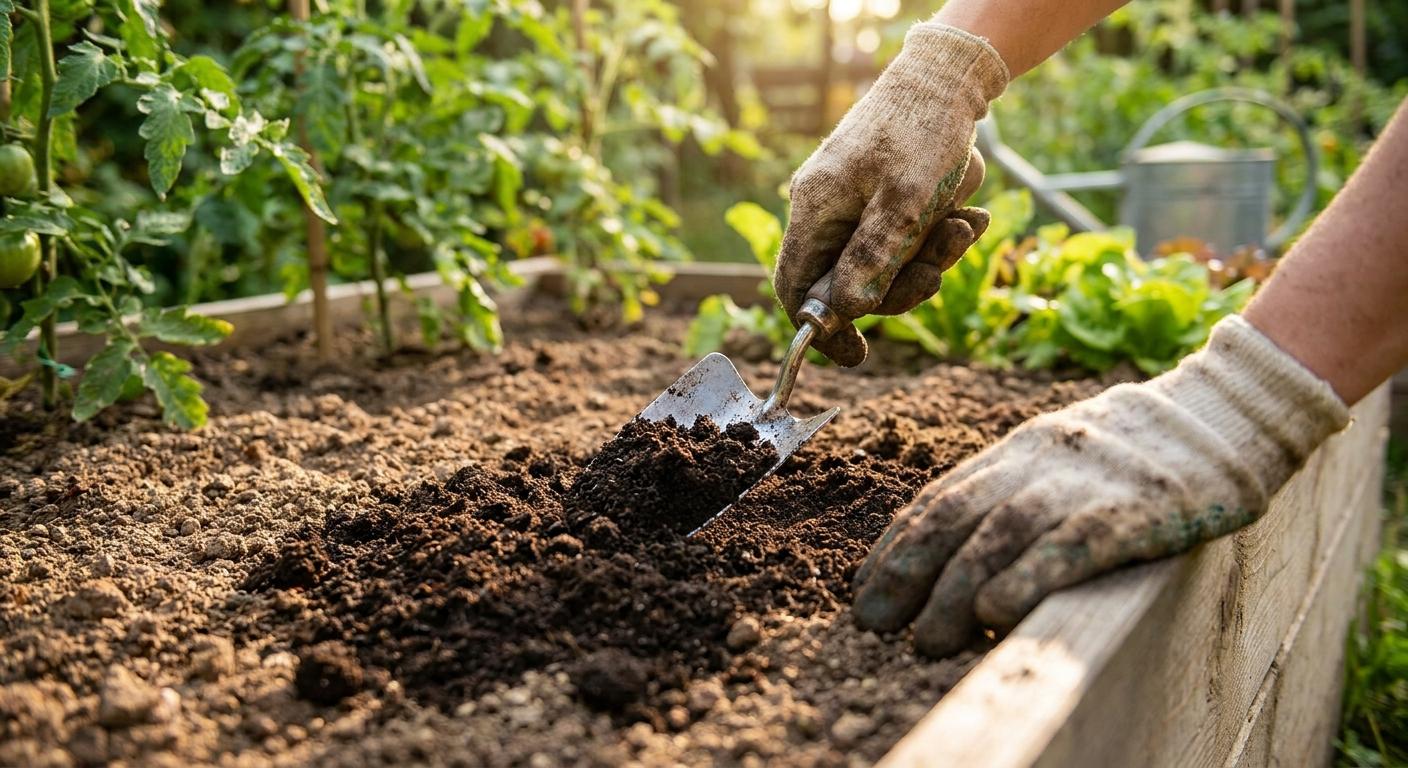
For feeding an established lawn, use a screened, well-rotted compost or fine topsoil top dressing applied at 0.5–1cm depth (5–10 litres per m²), worked into the surface with a brush or the back of a rake. For patchy or bare areas, a compost and grass seed combination applied 1–2cm deep helps new growth establish faster than seed alone. Avoid coarse, unscreened compost on lawns — lumps and debris left on the surface smother grass rather than feeding it.
A lot of the compost and topsoil advice aimed at gardeners is really written for beds and borders, and doesn't translate well to lawns. Grass wants something different: a fine, even layer that improves the soil without burying or smothering the blades underneath. This guide covers what to actually put down on a lawn, how much, and when — whether you're feeding healthy grass, repairing bare patches, or levelling out bumps and hollows.
What's the difference between top dressing and feeding a lawn with compost?
Top dressing means applying a thin layer of fine soil or compost over the whole lawn surface to improve levels, soil structure and drainage over time, while feeding is about adding nutrients to encourage growth — the two overlap but aren't quite the same job. A good top dressing mix does both: it improves the soil gradually while also introducing organic matter that feeds the grass as it breaks down.
Most lawn care experts recommend top dressing once or twice a year, ideally in autumn after scarifying and aerating, when the grass can recover quickly and the material has time to settle in before winter.
What compost or soil should I use on a lawn?
Use a fine, screened material specifically for lawns — either a screened topsoil top dressing or a well-rotted, finely sieved compost. Coarse garden compost, straight from a bulk bag meant for beds, is usually too lumpy and can smother grass rather than feed it. If you're blending your own mix, a common approach is:
| Mix | Ratio | Best for |
|---|---|---|
| Screened top dressing | 100% fine screened soil | Levelling and general top dressing |
| Loam and compost blend | 70% loam, 30% compost | Feeding and improving soil structure together |
| Sand and soil blend | 70% sandy loam, 30% screened soil | Heavy clay lawns needing better drainage |
| Compost and seed | Fine compost mixed with grass seed | Overseeding bare or thin patches |
How much compost or top dressing does a lawn need?
For a general lawn top dressing, apply 0.5–1cm evenly across the whole area, which works out at 5–10 litres per square metre. For a typical 50m² back garden lawn, that's roughly 250–500 litres, well under one 850-litre bulk bag.
| Lawn size | Depth | Approx. litres needed |
|---|---|---|
| 20m² | 1cm | 200L |
| 50m² (typical back garden) | 1cm | 500L |
| 100m² | 1cm | 1,000L |
| 50m² | 0.5cm (light maintenance dressing) | 250L |
For repairing bare patches rather than dressing the whole lawn, a thicker 1–2cm layer directly over the patch, mixed with grass seed, helps new growth establish without being buried too deep to germinate.
How do I use compost to repair a patchy or bare lawn?
Scratch up the bare patch with a rake to break the surface, scatter grass seed, then cover with a thin 1–2cm layer of fine compost or top dressing and firm it down lightly. Water regularly until the new grass is established. Going any deeper than 2cm over fresh seed risks burying it too far below the surface to germinate properly.
Can I use garden compost on a lawn, or does it need to be different?
Standard garden compost can be used on a lawn if it's fully matured and finely screened, but most bulk garden compost is too coarse straight out of the bag — it needs sieving first, or blending with sand and soil into a proper top dressing mix. Using unscreened compost directly on a lawn tends to leave lumps and debris sitting on the surface rather than settling in, which can smother grass in patches.
When is the best time to top dress a lawn in Scotland?
Early autumn, typically September, is the best time to top dress a lawn in Scotland — the soil is still warm enough for grass to recover quickly, rainfall helps the dressing settle in, and it gives the lawn time to establish before winter. A second, lighter application in spring can help lawns recover after a hard winter, though autumn remains the priority application for most gardens.
Is Kelvin topsoil or compost suitable for lawn top dressing?
Our Screened Top Soil is finely screened and suitable for lawn top dressing and levelling, while our Organic Compost can be used on lawns once sieved to remove any coarser material. For most lawn jobs, screened topsoil on its own, or blended with a small amount of compost, gives the best balance of levelling and feeding without the risk of smothering grass.
Ordering lawn top dressing and compost in Glasgow
- Measure your lawn area and decide whether you're dressing the whole lawn or repairing patches
- Choose Screened Top Soil for levelling and general dressing, or a compost blend for feeding
- Order online through our product pages, or call +44 7561 251350 for larger lawn or landscaping projects
We deliver across Glasgow, East Kilbride and South Lanarkshire (£15 local delivery in East Kilbride and surrounding areas), with quotes available for the wider Central Belt.
Frequently Asked Questions
Can I put too much compost on my lawn?
Yes — a layer thicker than 1–2cm can smother grass rather than feed it, especially if the material is coarse or unscreened. Stick to thin, even applications rather than one heavy dressing.
Do I need to aerate before top dressing a lawn?
It helps considerably — aerating first (spiking or hollow-tining) opens up the soil so the top dressing works down into the root zone rather than just sitting on the surface.
Is sand or compost better for lawn drainage?
For heavy clay lawns, a sand and soil blend improves drainage more effectively than compost alone, which tends to hold moisture rather than release it.
How long does it take for grass to recover after top dressing?
Most lawns show visible improvement within 2–4 weeks of an autumn top dressing, with the full benefit to soil structure developing over the following growing season.
Can I top dress a lawn with regular garden soil?
Only if it's fine and screened — unscreened garden soil often contains stones, clumps and debris that sit on the surface and interfere with mowing and grass growth.
Need Garden Supplies Delivered in Glasgow?
Organic compost, topsoil, manure and more across Scotland